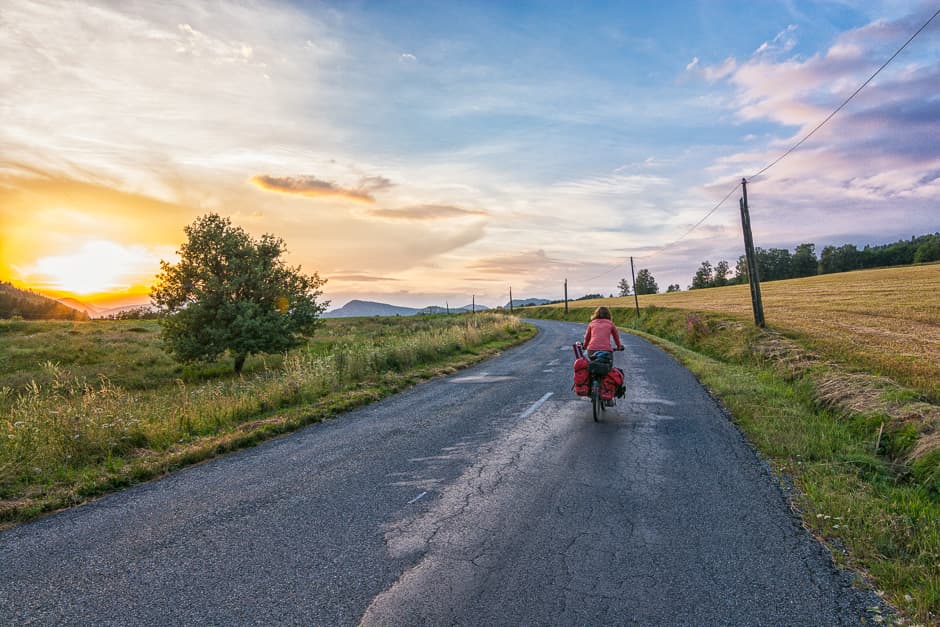
Our pedalling through northern Italy was ticking along nicely — no surprises. That afternoon we were heading to a farm where a family had invited us to spend the night, planning to follow the River Po the next day.
We were riding through a small village when a woman decided to open her parked car door without looking — at exactly the wrong moment.
The door hit my front pannier as I passed at more than 20 kilometres per hour. My reflex was to fight the force of the impact, grip the handlebars hard to keep the bike upright, and brake to soften any fall.
What happens in an accident
An accident can last one or two seconds; the reaction time is tiny, but your brain fires back in milliseconds. It analyses the situation and sends whatever response it deems best. Sometimes it gets it right. Sometimes not so much.
I gripped the bars so hard I managed to keep the bike on course. A few metres further on I was able to stop without going down, still working to keep the bike straight — all while not stopping to swear at the Italian woman who had just put my body, my bike and my entire journey at risk. Another reflex.
She apologised, admitted it was her fault, asked if I was all right — and drove off before I had a chance to realise that while I was fine, the bike had taken the hit.
Damage assessment
At first I assumed the wheel or the brakes had gone out of alignment. A quick glance at the wheel and at the clock: I decided to release the front brakes so we could keep going. We needed to reach the host farm before dark.
The adrenaline gradually settled, and as I pedalled that evening a growing unease replaced it — the bike was wobbling. I kept trying to replay the accident in my head, working out what had hit what, how I'd braked, stopped, or nearly fallen. It was all a blur.
What exactly was damaged? What isn't straight? What does the bike feel like? I'd stared at it so long I couldn't tell any more whether the lines were bent or just looked that way.
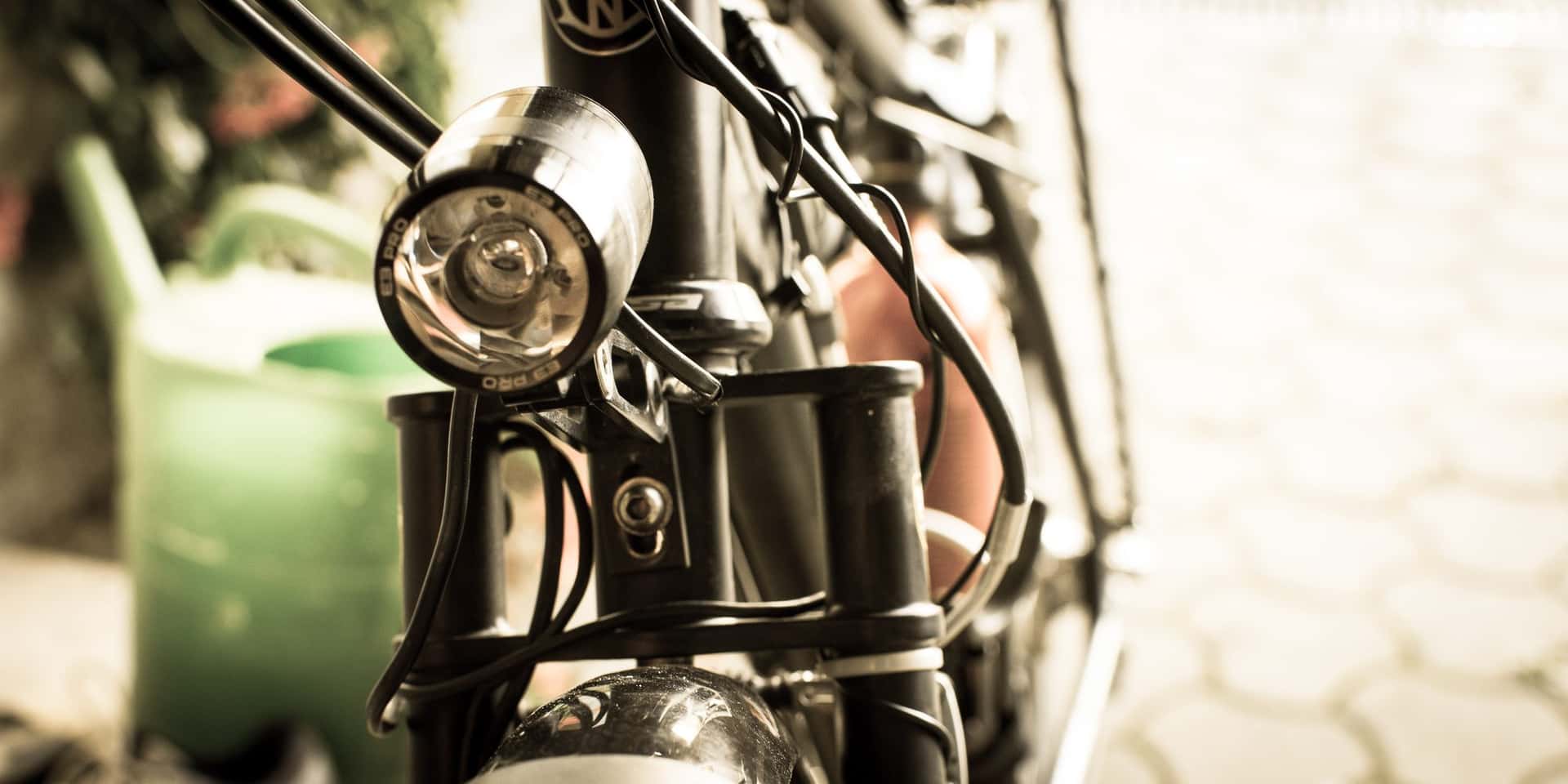
The wheel was definitely out of true, but I had a nagging feeling the front fork — the tube connecting the front wheel to the handlebars — was doing something odd.
I spent the next day photographing the bike and consulting the manufacturer's technical support, as well as several bike-touring forums. Everyone said the frame and fork looked fine; I just needed to true the wheel.
When we asked our host about a bike shop, my fears were confirmed: in August, all of Italy is on holiday. The only open shop was Decathlon, so we headed over to try our luck — and found people who knew less than me and had a wait of several days.
Back at the farm I decided to sort it myself, using a couple of chairs to prop the bike up. It was probably not the ideal moment to learn how to adjust spokes, but after more than an hour of trial and error the result left me more than satisfied.
The bike was rideable, the wheel no longer wobbled — but over the following days I kept feeling something strange in the handling, as though it kept pulling to one side.
I'd try lifting my hands from the bars while pedalling and couldn't keep them off for more than a fraction of a second. Something was wrong. I could no longer do the old joke: look Mum, no hands; look Mum, no legs; look Mum, no hands or legs; look Mum... no teeth...
More internet research, more questions, until someone suggested that maybe the fork tube itself was bent.
When we finally got to stay with another Warmshowers member, I took the chance to strip the steering out and have a proper look.
The fork was bent
To my dismay, the fork really was bent. Given the weight I carry — more than 50 kilos of gear — and the kilometres still ahead, trying to bend it back seemed neither sensible nor safe. The fork had to go.
I needed to order a replacement from the manufacturer, which meant giving a delivery address. A tent between two pine trees didn't seem like a great option, so I asked a Warmshowers member in Ljubljana, Slovenia, whether they could receive the parcel for me.
They were sympathetic to our adventure and bad luck, and agreed. A few days later we were in Ljubljana, fitting the new fork and using the opportunity to do some general maintenance.
Everything worked perfectly again — the wheel was back where it should be and the steering ran true.
The problems multiply: the eccentric bottom bracket
That was the moment I had the bright idea of changing the bottom bracket, which had been making noise for a while.
My bike has a Rohloff internal gear hub and an eccentric bottom bracket. Every other component is standard — the sort of thing that handles thousands of kilometres without complaint and can be found pretty much anywhere. But the hub and the eccentric are specific parts; they shouldn't fail during a journey, but they're not made or sold everywhere.
Unbolting the bottom bracket, I discovered the eccentric was damaged — mea culpa — from not having touched it during the first year and a half of the bike's life. When I first needed to adjust it, months earlier in Valencia, it was so stiff that moving it caused damage. I just hadn't noticed until now. Maybe that's why it was making noise.
Removing the bottom bracket this time made things worse — I couldn't seat it properly back in the shell, and now I urgently needed a replacement.
With half a bottom bracket rattling around in the axle, pressing on through the Balkans without knowing when a new eccentric might arrive seemed like a terrible idea.
Our Ljubljana host couldn't put us up any longer — other guests were due — and the factory was telling me the part could take over a week to ship.
What do we do now? Where do we go? Where do we wait for one, maybe two weeks?
Stay positive and you'll be rewarded
That same day we'd arranged to stay with another Warmshowers member, so I sent them an email explaining our situation and saying we wouldn't be able to make it today — that we were trying to sort out the mess we'd landed in.
A few minutes later my phone rang. They'd just spoken to their father and were offering us a stay — for as long as we needed — at the family's holiday house in the middle of the forest. In their own words: whatever you need — a week, two, a month...
We couldn't believe it. In all our travels we'd met generous people, people who'd lent a hand in difficult moments, but this felt like a miracle.
In the space of an hour we'd gone from being completely lost, with no idea what to do or where to go, to a family offering us their home for as long as it took.
From the first moment we felt part of the family — wrapped up and worry-free. They made us feel at home, opened their hearts, and told us that time or place was never the issue; the only thing that mattered was that we were comfortable and could continue our journey.
Resting up and getting the bikes road-ready
They gave us a place to rest, to let go of the doubts and simply enjoy life while we waited for the new part, and got both bikes ready to roll on through the Balkans.
We used the time to replace the chains, fit new sprockets and swap out the brake pads — which, after more than 10,000 km, were long overdue.
This gesture of hospitality came at the moment we needed it most. After eight months on the road we'd started wondering when and where to stop — sensing ourselves sinking slowly into a routine, needing to do something different for a while. What better than spending a week in a little house in the middle of a forest in green Slovenia?
A thousand thank-yous, Marjan! A thousand thank-yous, Žiga! Thank you for welcoming us into your family and into your home. Thank you for bringing back our smiles, for showing us once again the warmth and empathy of Slovenia — and of humanity in general.