- 2026-07-31
- Europe, closed: North Macedonia, Luxembourg, Moldova, Malta, Cyprus, Andorra, Monaco, San Marino and Liechtenstein — plus Brussels-Capital, which completes Belgium. Malta turns out to be the guide's most figure-dense page (up to €50,000 at Majjistral), Cyprus publishes its forest campsite network, and Andorra accepts pitching beside a full refuge.
- 2026-07-31
- Iran and Asia, and with them the whole route covered: Japan, Thailand, Laos, Indonesia, Malaysia, China and Iran. Japan says in writing that you may camp on the riverbed without a permit and that the fatigue nap at a michi-no-eki is fine; Thailand publishes its tariffs — THB 30 for a tent; and Laos is the guide's first country where being foreign changes the answer completely.
- 2026-07-31
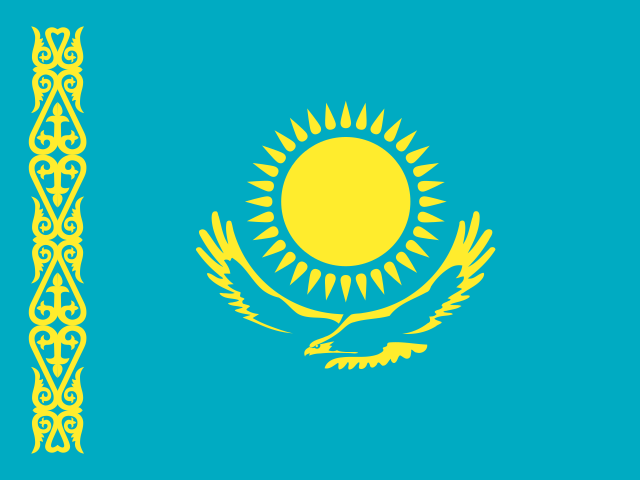
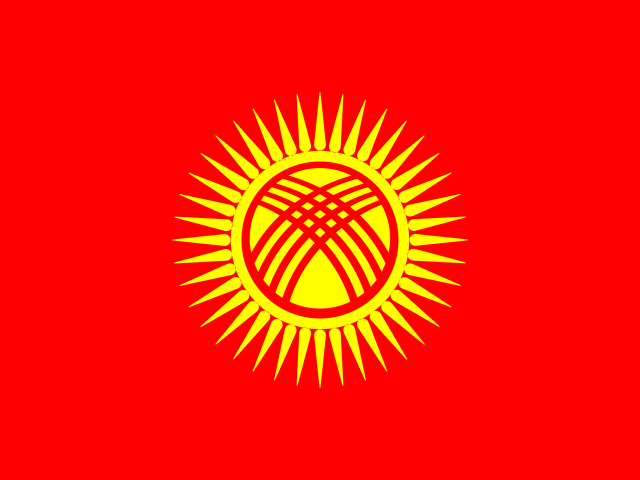
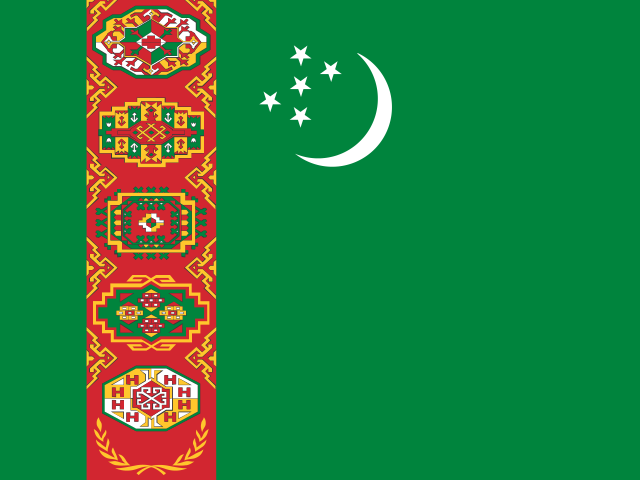
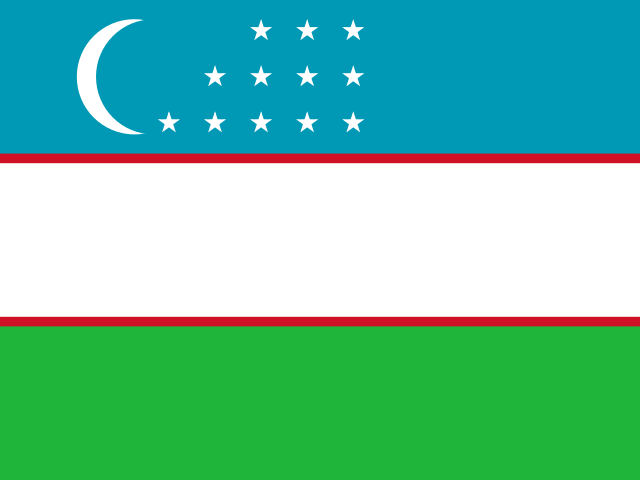
- The trip belt: Georgia, Armenia, Kyrgyzstan, Kazakhstan, Uzbekistan and Turkmenistan — the countries we crossed by bike. Here the night isn't decided by camping law but by the border: three working days' notice in Kyrgyzstan, ten for the Kazakh pass, and 55 days in advance for a Spaniard to enter Baikonur.
- 2026-07-31
- The anglosphere: New Zealand, the United States, Australia and Canada. New Zealand's self-containment law since June 2026, the BLM 14-day myth dismantled, and British Columbia's policy that genuinely allows fourteen nights — with its 72-hour reset rule.
- 2026-07-31
- Germany, Austria and Switzerland, complete: all sixteen German Länder, all nine Austrian ones and all twenty-six Swiss cantons, one by one. Thuringia states in writing that bivouacking is camping, Vienna bans the sleeping bag in those words, Upper Austria runs a stopwatch — camping starts at 90 minutes — and Zug accepts up to four people with one tent.
- 2026-07-31
- Spain, complete: all seventeen communities, one by one. With a surprise — Murcia permits small-scale camping, and half of Spain has a brand-new decree from between 2022 and 2026.
- 2026-07-31
- The Balkans and the Baltics: Bosnia, Montenegro, Albania, Serbia, Türkiye, Estonia, Latvia and Lithuania — 80 new rules, including Bosnia's three laws, Estonia's presumed permission and the three Lithuanian words that save you the fine.
- 2026-07-30
- Baltic to Aegean: Slovenia, Czechia, Slovakia, Poland, Hungary, Romania, Bulgaria and Iceland — 62 new rules, including Slovenia's brand-new 2026 law and Czechia's 'pod širákem' doctrine in writing.
- 2026-07-30
- Eight more countries in one go: Switzerland, Austria, Croatia, Ireland, the Netherlands, Belgium, Denmark and Finland — 88 new rules, myths included: Croatia's real fine and the Dutch pole camping that no longer exists.
- 2026-07-30
- Eight countries in one go: Spain, Portugal, Italy, the UK, Germany, Norway, Sweden and Greece — 134 more rules.
- 2026-07-30
- The guide launches with France: 25 rules verified against official sources.