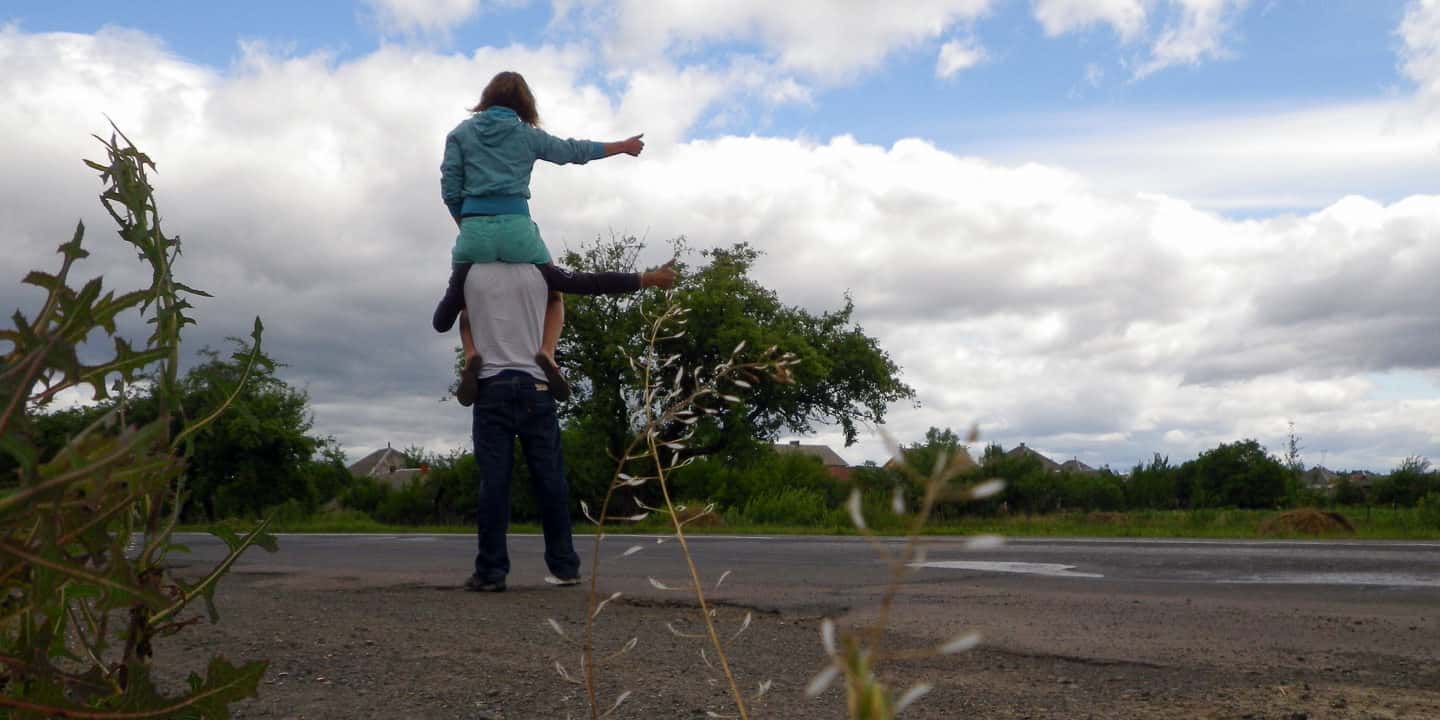
I learned to hitchhike almost by accident — on a road on the outskirts of Prague, a soggy piece of cardboard in my hand and absolutely no idea what I was doing. Since then I've stuck my thumb out across half of Europe and a good chunk of Asia: hitchhiked the whole way from Latvia to Spain, did a visa run in Turkey by thumb, and even got picked up by a motorbike in the middle of Thailand.
So this isn't theory scraped off the internet. This is what has actually worked for me — and what hasn't — after thousands of kilometres without spending a euro on transport. Let's get into it.
Is hitchhiking actually worth it?
The first essential is knowing why you're doing it. Not just because it's free — though that's a bonus — but because you genuinely enjoy it. Hitchhiking isn't the fastest way to get from A to B; it's a way of travelling where the journey is the point. You end up in conversations you never expected, in houses you'd never otherwise have been invited into, listening to stories from the people who pick you up.
If you see it purely as "free transport", the waiting will grind you down. If you see it as part of the adventure, you'll never want to stop.
Is hitchhiking safe?
The question everyone asks. My honest answer after all these years: yes, with common sense. The vast majority of people who stop are good people who want to help or just fancy a chat. That said, these are my rules:
- Trust your gut. If a car gives you a bad feeling, you're under no obligation to get in. Ask where they're going before you open the door, and if something feels off, say you're waiting for another ride.
- Clock the driver and the car while they're slowing down. You've got those few seconds to decide.
- Share your location with someone you trust and, if you can, write down the number plate visibly before you climb in.
- Women travelling solo do it all the time and without trouble, but it pays to be more selective — and if in doubt, wait for a car with a couple or a family.
In all my travels, the dodgy moments I can count on one hand, and they were almost always about the driving, not anything worse.
Is hitchhiking legal?
In most of Europe it's perfectly legal, with one important caveat: almost everywhere it's forbidden to stand on a motorway or dual carriageway itself. The fix is simple: position yourself before the slip road, at petrol stations, service areas or on access roads. Nobody's going to give you grief there.
Some countries have their quirks, so if you're heading somewhere new it's worth checking local rules. But as a general rule: thumb out before the motorway, no worries.
Where to stand: location is almost everything
Where you hitchhike matters more than anything else. Find a spot that ticks three boxes: drivers can see you in good time, they're not going too fast, and there's somewhere to pull over — a wide verge, a bus stop, a junction.
My favourite spots:
- Roundabout exits and junctions, where cars are already slowing down.
- Motorway slip roads, just before the merge.
- Before or after toll booths, where cars have to brake anyway.
- Big petrol stations near the exit: you can even ask people directly (not my personal favourite tactic, but it works brilliantly for lots of hitchhikers).
For finding the perfect spot in a new city, Hitchwiki is your best friend: it has the best departure points for almost every city, including which local buses get you out to the edge of town.
And let's be clear: if a driver really wants to pick you up, all of this becomes secondary. People have reversed back down a motorway for me and stopped round blind bends with no visibility just to give me a lift. The spot helps, but the driver's willingness is what counts.
If you want the detail broken down country by country, I cover it in where to hitchhike.
Getting ready: sign, marker, and pack
Always carry a permanent marker. It weighs nothing, and if you need a sign you just find a bit of cardboard — easy enough — and you're sorted.
Sign or no sign? My rule:
- With a sign in countries where people don't speak your language and you don't share theirs, where hitchhiking is slow, or for long hauls on busy roads. If you're going very far, write the country name rather than a city.
- No sign for short hops, small villages on minor roads, or countries where it's dead easy — like Poland. Half the time it takes you longer to make the sign than to get a lift.
And show off your backpack: it marks you out as a traveller. That said, if you've got extra bags hanging off you, tuck them away a bit so nobody decides there's no room before they've even slowed down.
The attitude: smile and make eye contact
This sounds obvious and it's the most important thing of all. When you put your thumb out, keep a positive attitude, smile, and make eye contact with drivers. People pick up people, not thumbs.
A couple of details that make a real difference:
- Dress reasonably. In Western countries, lads — ditch the vest.
- Nothing covering your face: no cap pulled down low and, above all, no sunglasses. Drivers need to see your eyes.
- If someone stops, walk over with energy but don't launch yourself at the car door: ask where they're going and whether they can take you before you get in.
Once you're in: how to get a longer ride
Once inside, adapt to the driver but try to keep a good conversation going. This isn't just politeness — if the person enjoys having you in the car, they're far more likely to go a few kilometres out of their way to drop you somewhere useful, or take you exactly where you need to be in a city. Some of the best experiences of my travelling life started with a good chat in the passenger seat.
My hitchhiking stories
Theory is all well and good, but hitchhiking has to be lived. If you want to see how all this plays out on the actual road:
- Prague, where I discovered hitchhiking — how it all started.
- From Latvia to Spain by thumb — an entire country on the thumb.
- A visa run in Turkey by hitchhiking — crossing borders for free.
- A motorbike picked us up in Thailand — hitchhiking works in Asia too.
Hitchhiking FAQs
How long does it take to get a ride? It varies massively depending on the country and the spot. In Poland or Romania, minutes. In Spain or on a Sunday afternoon, it could be an hour or more. Patience is part of the game.
Do I need to speak the language? It helps, but it's not essential. A sign, a smile and a few words go a long way. I've been picked up by drivers with whom I didn't share a single word.
Can you hitchhike as a couple? Yes, and it's actually the ideal combination: a mixed couple projects confidence and tends to get picked up quickly. Two blokes together have a slightly harder time.
What about bad weather? It rains and nobody stops... until someone takes pity and pulls over earlier than they otherwise would. Rain plays in your favour more than you'd think. Bring waterproofs and stick it out.
Hitchhiking taught me that you can cross the world by trusting strangers, and that they almost always give that trust back. Once you get over the fear, there's no going back.
Want to travel more on less? I'm putting together a free guide with everything I've learned to go round the world on €3 a day. Leave your email and I'll let you know as soon as it's ready.