My first contact with hitchhiking was in Prague. I met Iker, a guy from the Basque Country who was hitching his way from Barcelona to Moscow. His stories fascinated me, and he planted the seed.
Getting ready for my first ride
I decided to give it a go in Amsterdam. My first ride was from the Dutch capital to Antwerp, Belgium. Since it was my first time, I did my research: looked up recommended spots for hitching in Amsterdam on Hitchwiki (the hitchhiker's Wikipedia), checked Google Maps, noted down some road numbers and the towns in between, bought a marker pen, and started walking towards the edge of the city.
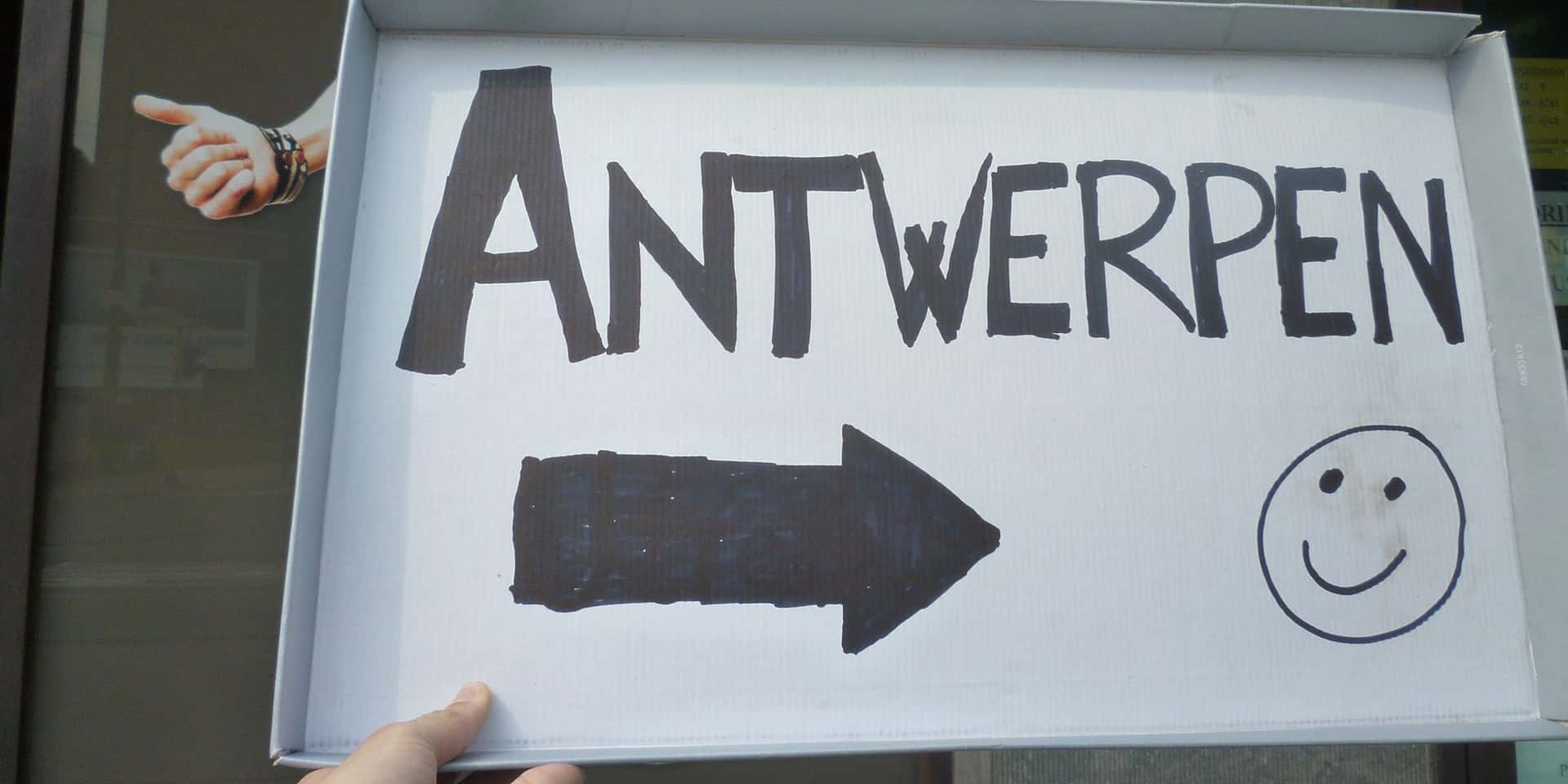
On the way I grabbed a piece of cardboard and christened my new pen.
Amsterdam to Antwerp: my first lift
I reached the edge of town, found the motorway junction I'd identified, and started trying my luck. Five minutes later someone going the other way stopped and told me I'd made my first mistake — there wasn't enough room to pull over where I was standing, which would make it hard for anyone to pick me up. He suggested I move a few hundred metres further along.
I took his advice and found a spot with a wide verge that looked promising. Ten minutes later two Latvian girls appeared — they'd been hitching all the way from their home country. The smiley face on my cardboard stood in charming contrast to the little flowers on theirs. Different styles.
After fifteen minutes chatting with the Latvian girls we parted ways and carried on hitching separately — three people in one car was going to be a tall order.
In under ten minutes a car stopped and took me halfway. The driver was a fifty-something single man from Rotterdam, curious about my travels and — clearly — about my love life.
He dropped me at an on-ramp to the motorway heading to Antwerp, next to a bridge. I waited less than a minute before the next car stopped — the second one to pass. It was a deliveryman who lived in Antwerp, heading home in his brand new van with 30,000 kilometres already on the clock in under a month. He didn't speak Spanish but liked singing in it, so I had to endure a round of Cuban songs for a bit. It was actually pretty entertaining.
Hooked: hitching all around Belgium
Sold on the efficiency, safety and sheer fun of that first experience, I decided to keep hitching my way around Belgium. Every solo journey in the country was done this way.
From Antwerp to Brussels, a Frenchman in his forties with a sister living in Alicante picked me up — very friendly, nabbed me while I was still walking out of Antwerp, and drove at 150km/h.
From Menen to Bruges I was picked up by the second car that passed — a woman in her mid-forties on her way to work. She dropped me halfway, and a couple in their thirties heading to Bruges for a bike ride took me the rest of the way. Very pleasant people; the whole journey was a conversation about travel and their country.
The return from Bruges to Menen was equally quick — within a minute a couple in a company car had picked me up, drove me all the way to the door, and we ended up chatting for a while after we arrived.
The following day, from Menen to Ghent. This was the first slightly odd situation — a Frenchman who spoke no English and didn't seem particularly talkative, driving at 150km/h with no seatbelt. But no real dramas.
From Ghent to Leuven was the first time I had to wait more than five minutes in Belgium. I'd positioned myself well enough, but the cardboard I found on the way out of town was a bit rubbish and my marker pen was on its last legs — the sign wasn't as visible as I'd have liked.
After an hour of waiting, a girl appeared on a bicycle. She lived right across the road and offered to bring me a bigger, cleaner piece of cardboard and a new pen. She insisted on making the sign herself. We chatted for a while, and fifteen minutes later a pair of guys in their thirties — one German, one Romanian — stopped and took me practically to the door of where I was staying.
From Leuven I went to Brussels in three very quick rides, all with people on their way to work. For the return journey a retired couple picked me up — wife driving, following the GPS with complete blind faith — and dropped me somewhere rather unhelpful for hitching onwards. Just when I thought I'd have to walk to Leuven without a proper verge, I raised my sign for a few seconds and two very cheerful (and slightly mad) girls who were coming back from the airport stopped in the middle of a tight bend and invited me in. They took me to the door and we ended up making plans for the following evening.
What that first day taught me
Hitchhiking is brilliant. After all this I can tell you with complete confidence that I'll be doing it again. You meet people from all over the place, conversations go in all sorts of directions, there are no timetables to worry about, it's free, and — at least in the countries I've tried — it's remarkably fast.
Looking back, the lessons from this one trip held up for years afterwards: stand where a car can actually stop, make a sign people can read from a distance, pick on-ramps and junctions over open motorway, and be the kind of person a stranger feels good about letting in. That seed Iker planted in Prague turned into thousands of kilometres — I'd go on to cross 1,500 km in two days and pull off stranger lifts than I could have imagined, like the day I ended up driving a convertible through France.
If you want the full playbook rather than just my first-day diary, I wrote it all down in how to hitchhike: the complete guide and in where to hitchhike — the best spots and why they work.
Frequently asked questions
Is hitchhiking safe?
In my experience, across the European countries I've tried it, remarkably so — that first day in Belgium was nothing but friendly, curious, generous drivers. Use common sense: trust your gut, sit by an unlocked door, keep your bag within reach, and don't be afraid to wave a lift on if something feels off. Most of the danger is in the reputation, not the reality.
Do I need a sign?
It helps enormously. A clear sign with your destination lets drivers decide before they've even slowed down, and the difference between a scruffy scrawl and a big, readable one is the difference between waiting an hour and waiting five minutes — I learned that the hard way outside Ghent. Bring a thick marker and grab cardboard as you go.
Where should I stand to get picked up?
Somewhere a car can safely pull over and somewhere it's heading the right way: motorway on-ramps, the exits of petrol stations, junctions leaving town. My very first mistake was standing where there was no room to stop — move a few hundred metres until there's a wide verge or a lay-by.
How long will I have to wait?
Often surprisingly little. Most of my Belgian lifts came within a few minutes, sometimes from the very next car. Waits stretch out when your spot is poor or your sign is hard to read, so fix those two things first before blaming your luck.
How do I start hitchhiking if I've never done it?
Pick a short, easy first leg between two towns, look up good spots on Hitchwiki, note the road numbers, make a clear sign, and just go. You'll make a couple of rookie errors on day one — everyone does — and you'll have them ironed out by the afternoon.
See you on the hard shoulder.