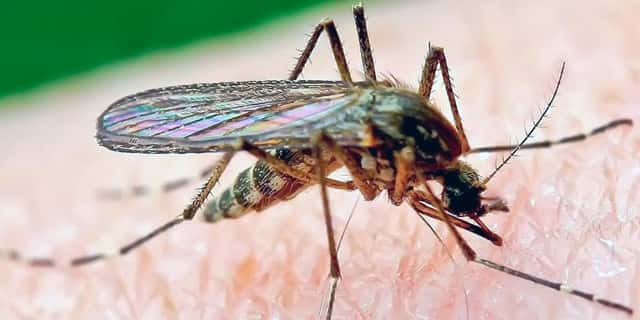
Five months roaming Southeast Asia have turned us into seasoned warriors in the war against mosquito armies.
Sometimes they attack in swarms; sometimes a lone scout comes for you. Sometimes they're over a centimetre long; sometimes they're practically needle-sized. Either way, you have to accept that they are the enemy.
After testing all kinds of nets and clothing, creams and sprays, bracelets and oils — after collecting dozens of bites in a single day and also managing to stay untouched for more than 24 hours — it's time to break down what actually works.
Will long sleeves be enough?
One night outdoors in long trousers and a long-sleeved shirt, sweating buckets but confident we'd survive the assault, we learned a hard lesson when we got back to the guesthouse.
The mosquitoes had bitten us through our clothes. Long sleeves do reduce bites, but they can still punch through fabric. Don't count on it as your only line of defence.
What to do when you check into a room?
The first thing we do when inspecting any guesthouse, apartment or hotel room is check how well sealed it is. Do the windows have mesh screens? Are there gaps where insects can get in? Is the bed net torn?
After confirming — or accepting with a sigh — that mosquitoes are going to come and go as they please, the next move is to hunt down and eliminate every one already in the room. New ones will keep arriving, but if you can at least clear out the current residents, you reduce the risk.
Since the rooms we rent are always cheap, they're also small and bare. The lack of furniture and corners actually makes it easier to spot, chase, and kill the mosquitoes already inside.
Once you've dealt with the immediate threat, the next step is to sleep inside a net — because sooner or later, reinforcements will arrive.
Will a mosquito net keep us safe?
Everywhere we slept we used nets, stitching up any holes we found to make sure we were actually protected. We even bought a mosquito-tent for beach nights or beds that didn't come with a net.
Using our mosquito tent on a beach in Ko Samet
Overall the results were really positive — and we never bothered spraying the net with repellent, despite what travel websites and travel clinics recommend.
One thing to watch out for though: don't let your hands, feet or elbows press against the net while you sleep. You'll get bitten right through the mesh. More than once I woke up mid-bite from one of our beloved enemies.
— Ha, stupid human — did you really think this little net would stop me?
Any malaria prevention medication?
We didn't take any antimalarial drugs. When we visited the travel health clinic before leaving, our doctor prescribed Malarone, but told us not to take it unless we actually developed symptoms. Treat it after the fact, only if necessary.
Normal use of the drug requires taking one or more tablets every day, which is only really recommended for short trips. According to our doctor, Malarone can also reduce the severity of malaria and be used for self-treatment over three days until you can reach a hospital for proper testing and care.
Given the many side effects of these drugs, we had no intention of taking them — in our view, the guaranteed damage to our bodies was far more likely than the remote chance of actually catching malaria.
What about citronella mosquito bracelets?
Our first bright idea was to try some citronella bracelets from Decathlon — waterproof and supposedly good for a whole month of protection! To be honest, we weren't expecting full coverage, but we figured they'd at least cut down on bites in lower-risk areas.
Using something natural like citronella rather than a nasty chemical like DEET felt like the right call.
A week later we got our answer: we watched several mosquitoes buzzing around and biting right next to the bracelet. It seemed to attract them rather than repel them.
After seeing how little citronella did against Asian mosquitoes, we moved on to DEET.
Is a spray or cream with 15% DEET enough?
— Seriously Pablo, I sprayed it everywhere!
— Hard to tell — you're covered in bites.
— And you? Go look in a mirror!
That was roughly our conversation after a day with 15% DEET spray.
In Cambodia and Vietnam the strongest repellents we could find topped out at fifteen percent DEET, and in both countries we were bitten constantly. If there were mosquitoes, we got bitten.
Our only real strategy was to keep moving and avoid open, exposed spaces during dawn — easy enough, just stay asleep — and dusk. Even then, the mosquitoes rarely let up, and the battle was relentless.
What's the strongest repellent you can get? DEET 95.
DEET was originally developed as a pesticide, then adopted by the US Army during the Vietnam War — they needed something to protect soldiers from mosquitoes, and they needed it fast. It worked, and it stuck.
I'm not sure what concentration they used or whether they fully tested all the side effects, but 95% can't be particularly good for you, especially with prolonged use.
In European and American travel shops you can find DEET 100
That said, given that we were constantly moving in and out of high-malaria-risk areas, we needed something that actually worked.
The first few days we drenched ourselves in it the same way we'd been using regular repellent — industrial quantities. After several bite-free days we started using much smaller amounts and confirmed just how effective it really was.
It was the first time we'd gone days without a single bite — though the liquid seemed pretty harsh on skin. One day I found a mysterious black liquid inside my bag. Had I struck oil?
Turns out a small amount had leaked out of the bottle and was eating through my gear. After a second look at what was supposed to be my waterproof dry bag, I confirmed that the DEET had punched a neat hole straight through the bottom.
Even so, despite its aggressiveness, repellents with 95% DEET concentration are the only ones that actually worked, so we kept using them.
Some tips if you want to buy it:
- Look for it in Thailand — it's the only country in Southeast Asia where I found it.
- Buy it in a big city like Bangkok, where a large bottle costs less than 150 baht (under €4). Wait until you're on some island and you'll likely be paying 500–600 baht.
- Keep it well sealed — at minimum inside a plastic bag. That way any small leaks won't destroy everything else in your pack.
- Start with small amounts and test its effectiveness gradually; that way you can work out exactly how much you need and keep the harmful effects to a minimum.
What to do after you get bitten?
The main thing is not to scratch, and to apply your cream, ointment or spray as soon as possible. Of all the post-bite remedies we tried, the ones that worked best were Tiger Balm-style products.
The ointment that best relieves the itch
It's not worth driving yourself mad worrying about malaria or dengue every time you get bitten. It's part of everyday life in Southeast Asia, and the odds of actually catching a disease are low.
Obviously, if you start developing malaria-like symptoms — fever, chills, headaches, muscle pain, vomiting, diarrhoea — and they haven't cleared up after a few days, it's worth finding a clinic and getting checked out. But seriously, don't panic over a few bites. I've lost count of mine somewhere in the hundreds.
Heading somewhere tropical? Have you had your own battles with mosquitoes in Southeast Asia? Leave a question or share your experience!
What you ask me most
- What repellent actually works against mosquitoes in Southeast Asia?
A spray with a high DEET content. With DEET at 95% it kept them off me for practically the whole day without reapplying. I bought it there: in countries like Vietnam you find plenty of DEET repellents, cheaper and easier than bringing it from home.
- How do I avoid getting bitten while I sleep?
A pop-up mosquito-net tent that sets up in seconds. And if you're sleeping in a room — especially one you can't seal off — make sure to hunt down any mosquitoes inside before you go to bed.
- Do I need to take antimalarial pills like Malarone?
I'll be honest: I didn't take them, I chose to protect myself with a good DEET repellent and a mosquito net. But it's a health decision, so don't just go by me: read up properly on the pros and cons and, if in doubt, check with a doctor or a travel-health clinic before you go.