We wanted to cycle around the world, but we needed money first. After finding out that getting work visas for Australia or New Zealand wasn't exactly straightforward, we decided to try England instead.
We flew from Estonia to Manchester — cheapest flight, and nowhere near as expensive or overwhelming as London — and arrived with just enough to cover the first month's rent and deposit. Pockets essentially empty.
A week later I was working. After eighteen months drifting around Europe, Africa and Asia — hitchhiking, taking local transport, constantly hunting for the local price for everything — working in England felt almost like being on holiday. The first few months I was genuinely relaxed, enjoying the stillness after relentless change, not having to stay permanently switched-on.
What it's like living in Manchester
Manchester is a lively, dynamic city with a huge amount going on culturally and in sport. The busiest, most buzzing time of year is Christmas, when the street markets draw people in from across the region.
The Northern Quarter is packed with bars and independent shops, the canals make for great walks or bike rides away from the traffic, and you can eat your way around the world in a single evening.
That said, after eighteen months of constant movement, being stuck in the same place for that long made us climb the walls of our room. Literally.
Living in Manchester we discovered that going shopping is a social activity — people head to the shops with their mates for fun, then go out to celebrate over cocktails at a restaurant, and then put on their new dress to do the pub crawl. The average Mancunian's social diary seemed to rotate between shopping and drinks, or football and beers, which got a bit wearing after a while. Finding someone who wanted to go camping, hiking or travelling somewhere that wasn't a beach resort was rare.
We had a plan and a deadline, so we weren't too bothered — but watching people stroll around window-shopping at night was pretty comical.
How to find work in Manchester
Finding a job in Manchester took a couple of hours dropping CVs off, visiting barely a dozen restaurants I'd selected. That afternoon I got three calls for interviews, and I basically picked the one I liked best.
If you're worried about how a one- or two-year travel gap will look on your CV, I can only give you good news. Those eighteen months of travel were my calling card.
How to write a cover letter
Here's the opening of my cover letter, to show you how easy it is to spin the gap as something positive:
After eighteen months travelling around the world and passing through more than 40 different countries, I am ready to settle down and put my energy, determination and experience to work for your restaurant and its customers.
Once you've got their attention and flipped the narrative, you can focus on selling yourself as a professional. Obviously it's different looking for work as a waiter versus an engineer, but don't be afraid of that sabbatical year — you can always use it to stand out from the crowd.
The principle underneath all of this: a manager hiring front-of-house wants someone calm under pressure, good with strangers, and unflappable when things go sideways. That's a near-perfect description of anyone who's just spent a year and a half hitchhiking across borders and sleeping in fields. Don't apologise for the gap — sell it as the training it actually was.
The best job for earning decent money in England
In hospitality you can earn really well, as long as you work in a decent restaurant — nothing too fancy, nothing too rough — where you keep your own tips and you're front-of-house: ideally waiting tables.
A great way to find restaurants worth working in (and earning well at) is Tripadvisor, just as if you were going out to eat. Look for places where people say the service is good and try to get a job there — when an English customer is happy, they tip well.
Every restaurant is different. Some let waiting staff keep their own tips after giving a cut to the kitchen and bar, or the manager; others pool everything and divide it at management's discretion. As a waiter, you want one of the former.
In a normal week, working less than 40 hours, it's possible to pocket several hundred pounds in tips — on top of a wage that's usually the minimum (just over six pounds an hour at the time).
Obviously it depends on your skills, the clientele, the quality of the food, how much effort you put in… But if the customer leaves happy, expect roughly 10% of the bill as a tip — that's been my experience in Manchester anyway.
The further north in England you go, the worse the tips tend to be, as a rule; the further south, supposedly the better.
How to save money living in England
Avoid London. Living in the capital is expensive and you don't earn significantly more than elsewhere. If you're an engineer who needs to be in London, fair enough — but to wait tables you don't need to take the tube every day and pay £500 a month for a room on the outskirts.
In Manchester we lived right in the centre, flat-sharing, in a pretty big room for £320 a month. It's easy to find central rooms, or rooms near wherever you're working, for around £300-odd a month in basically any UK city outside London.
For saving and managing money in the UK there's a site with an enormous amount of information called Money Saving Expert, and for deals and freebies HotUKDeals.
But the single biggest lever isn't a website — it's the gap between what you earn and what you spend. A travel fund is built on that gap, not on a big salary. We weren't on huge money; we were on tips plus minimum wage. What made the difference was keeping rent low (centre of Manchester, flat-share, not London), cooking at home, walking or cycling instead of paying for transport, and treating every shift's tips as money that already belonged to the bikes, not to a night out. Picture the deadline. Then spend like you mean it.
Getting around the UK
If you book in advance you can find train tickets with good discounts, and there are low-cost bus companies like Megabus.
For working out connections and planning journeys around England, a search tool that combines trains, flights and buses is worth having: put in your departure city and destination, pick a date, and it shows you every option at once.
One warning: be careful taking trains in winter — if there's a centimetre of snow on the tracks, services start getting cancelled. Ilze, who'd grown up spending whole winters buried under Latvian snow, couldn't understand how anyone could be scandalised by a few snowflakes.
Holidays on a bike
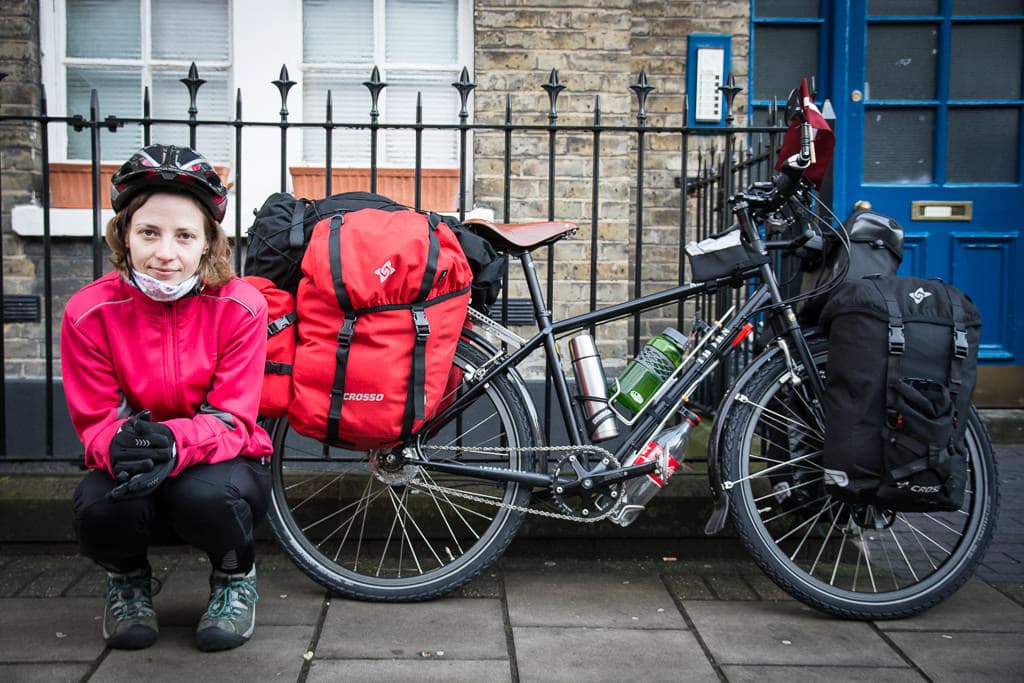
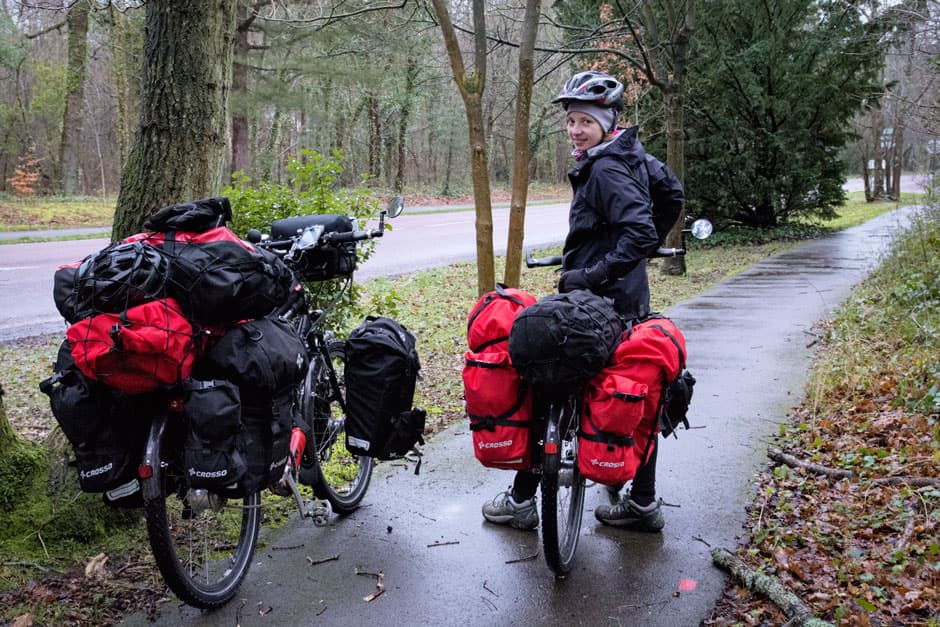
During our time off we used our holidays to escape on the bike around the UK. In February 2013, right after buying our bikes, we did a loop through the middle of England in the depths of winter.
That trip taught us what you actually need to camp daily in cold temperatures with snow all around, not to overdress while cycling and end up soaked in sweat, and that when things get really grim, someone always turns up to help.
In September we took more time off and headed north for a tour of Scotland by bike — a wonderful few weeks pedalling through the Highlands and battling midges.
Frequently asked questions
How quickly can you find work in Manchester?
For hospitality, surprisingly fast. It took me a couple of hours of dropping CVs at a dozen or so restaurants, and I had three interview calls the same afternoon. Front-of-house roles turn over constantly, so a good CV handed in person, in the right places, can land you a job within days.
Do you need to live in London to earn money in the UK?
No — and for most jobs I'd actively avoid it. London pay isn't dramatically higher for waiting tables, but the rent and transport will eat the difference and then some. A regional city like Manchester lets you live centrally for far less and save a much bigger slice of what you earn. For more on this mindset, see 12 ways to travel cheap and how to fund your travels.
What's the best job for saving money fast in England?
Waiting tables in a decent mid-range restaurant where you keep your own tips. The base wage is usually minimum, but tips on a normal week can add several hundred pounds — and happy British customers tip well, often around 10% of the bill. Use Tripadvisor to find well-reviewed places before you apply.
Will a gap year hurt my CV?
Quite the opposite, in my experience. Eighteen months on the road was my best calling card, not a liability. Frame it as proof you're resourceful, calm with people and unfazed by chaos — exactly what employers in service jobs are looking for.
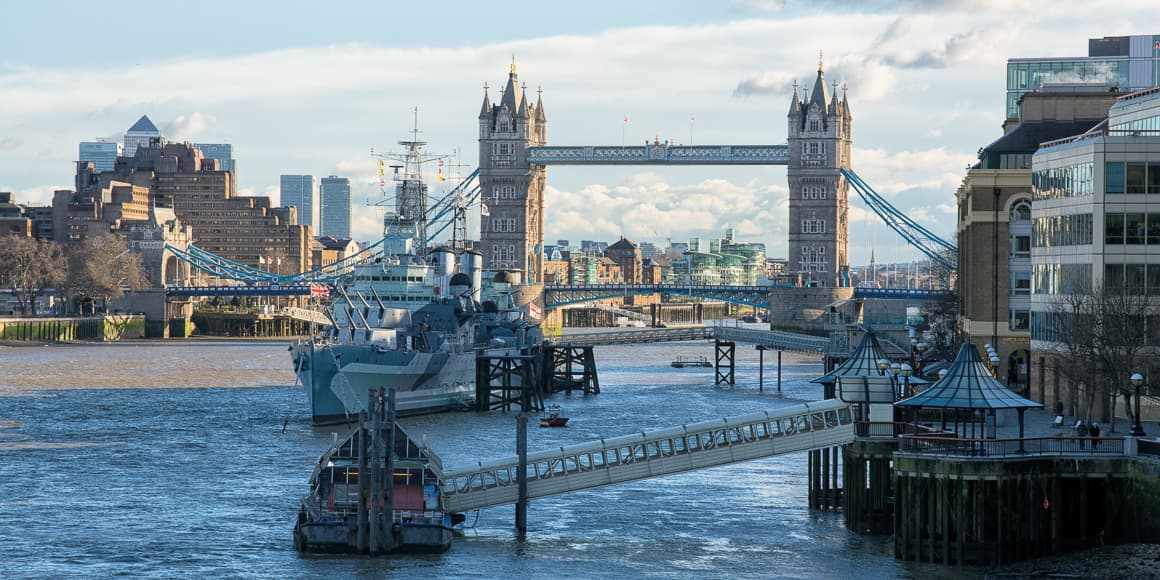
On 8 January 2014 we left Manchester, quit our jobs, moved out of our room, and put our bikes on a train to London — where our adventure cycling around the world began.