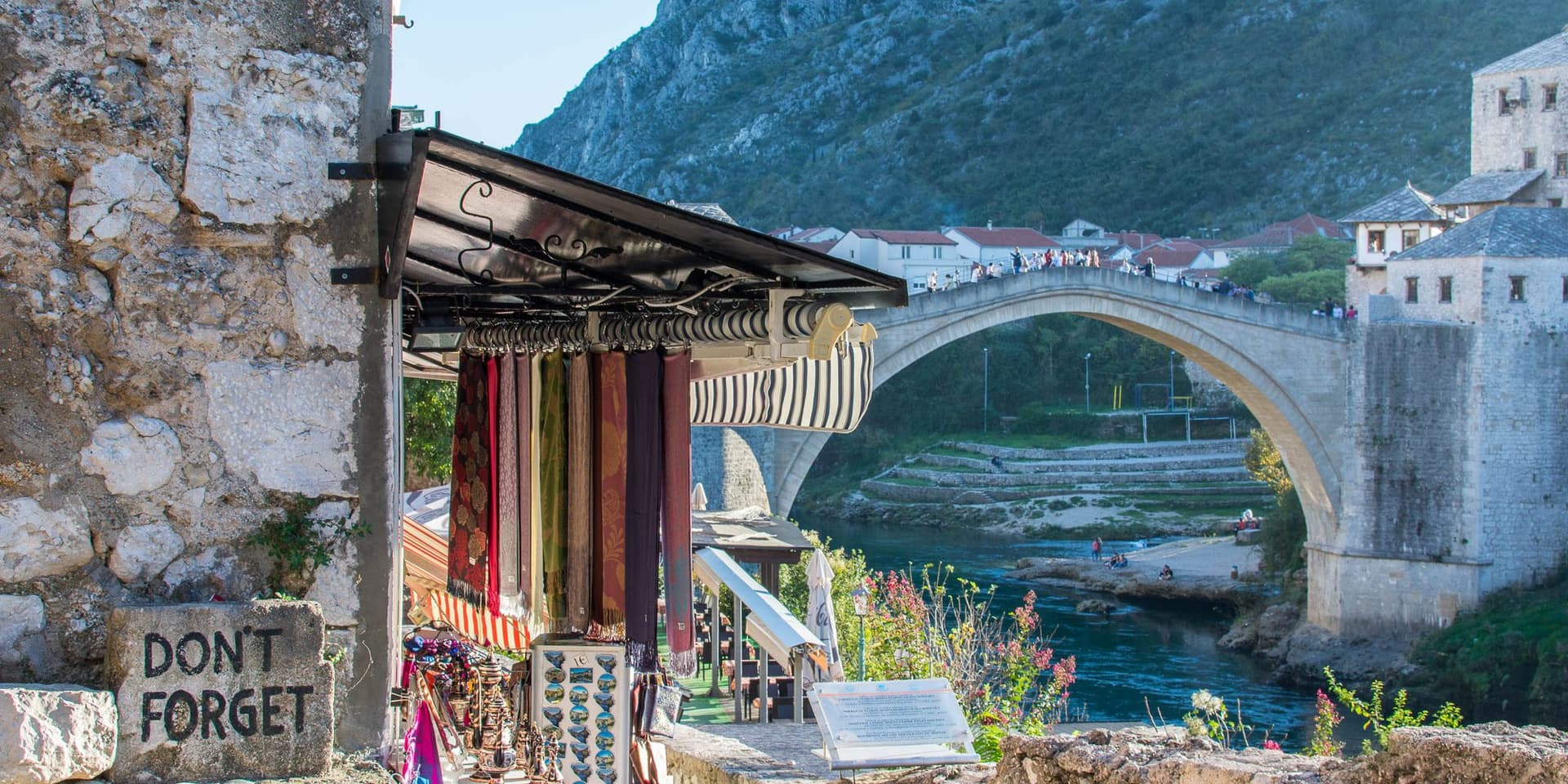
After a warm — if extremely wet — welcome to Bosnia, we pointed our bikes towards the mountains of Una National Park. The plan was to push through the mountains and the most rural parts of southern Bosnia-Herzegovina en route to Mostar — the only city we'd marked on the map as a "tourist destination worth visiting".
Our first task of the day was finding water and food, which took much longer than expected. In the Bosnian wilderness you can cover dozens of kilometres without crossing paths with a soul, let alone a shop.
Una National Park by bicycle
The road was getting a bit monotonous, so when we spotted a side track branching towards the mountains and a river, we took it. A bit more life appeared — a woman selling homemade produce — and thanks to her we discovered the delights of Ajvar: a roasted vegetable condiment (peppers, aubergine, tomato...) usually spread on bread, though we've had excellent results stirring it through pasta too.
We reached a riverbank and, naturally, followed the water. Before long we came across a campsite and, equally naturally, went in to ask if we could have a shower. It was day four without one — something had to give. The campsite owners were happy to oblige and even invited us for a coffee despite having no language in common.
We could probably have spent the night for free right there, but decided to push on for another hour — we were enjoying the road and there was still a couple of hours of daylight left.
A local stopped us to ask if we needed anything and recommended a spring a few kilometres ahead with particularly good water — good for your sex life, he told us. So we stopped to fill our bottles there and even cooked dinner by the spring.
Wild camping with a landmine risk
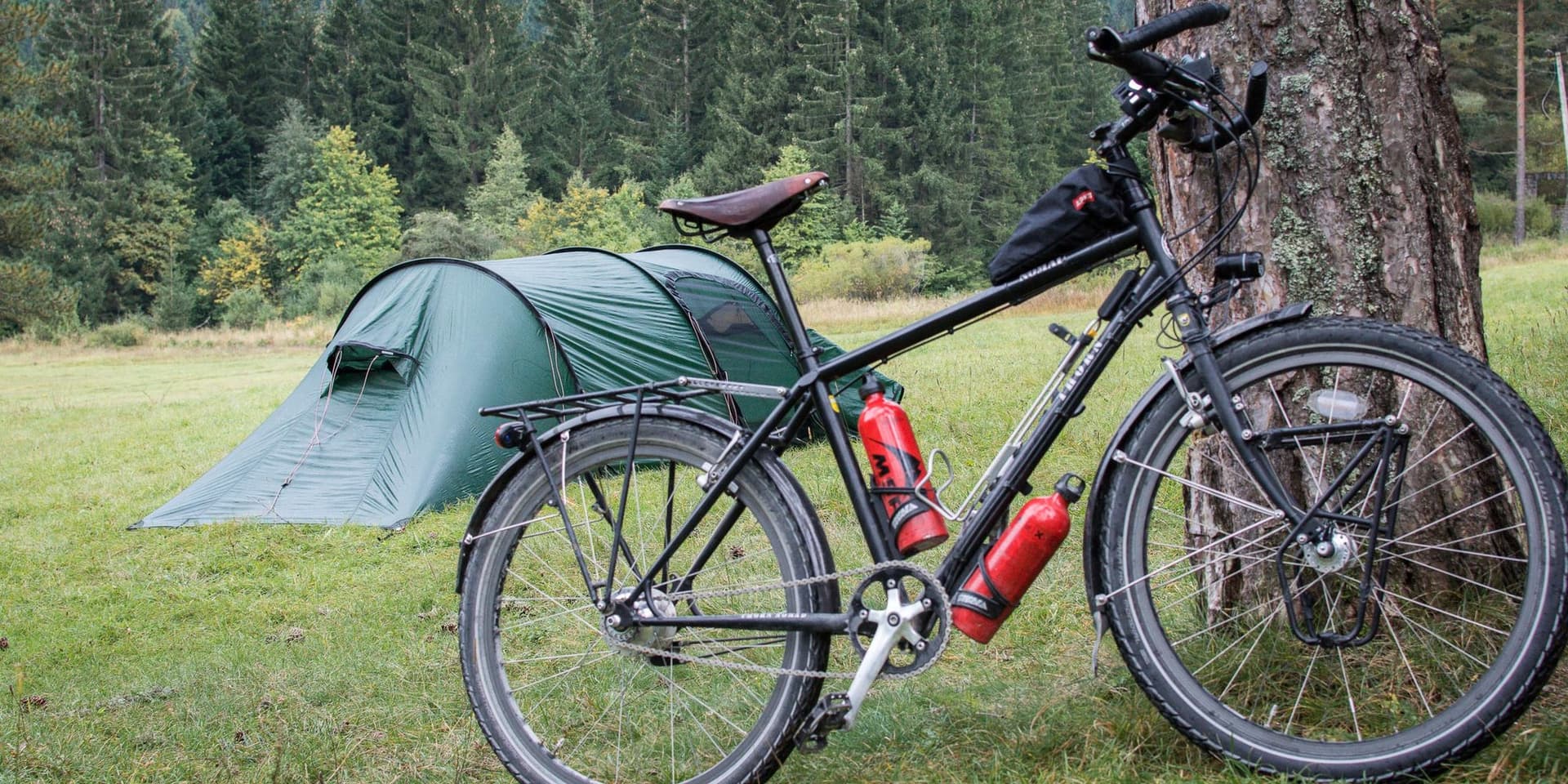
An hour later we'd found a field by the river for the tent. We were somewhat concerned about landmines, but we trusted that being a National Park the area would be clear of them — we hadn't seen any warning signs, which was reassuring enough.
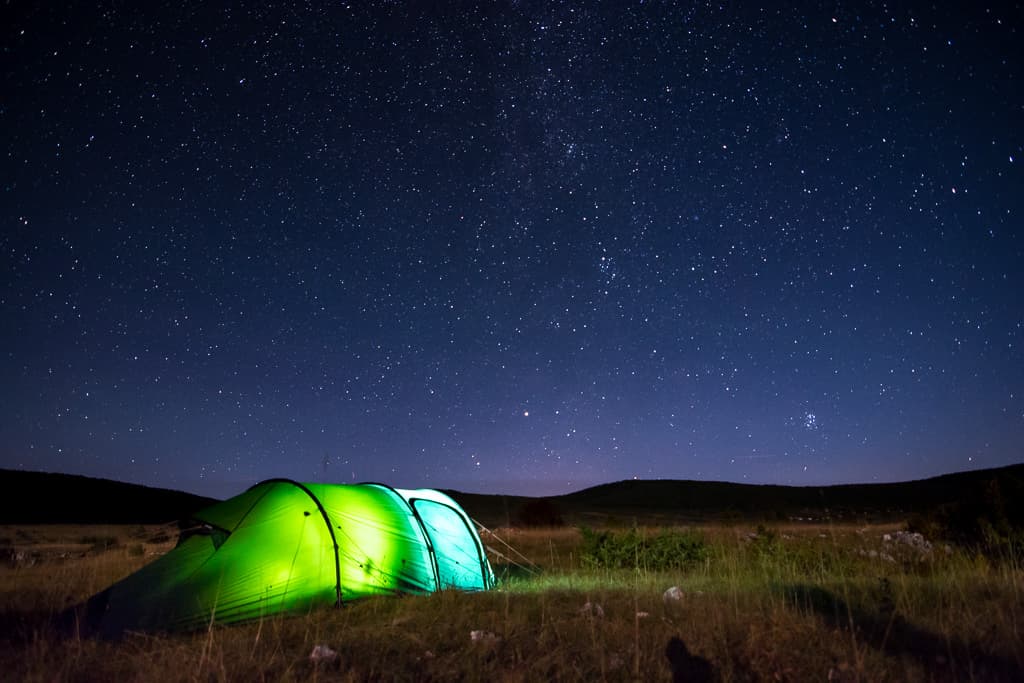
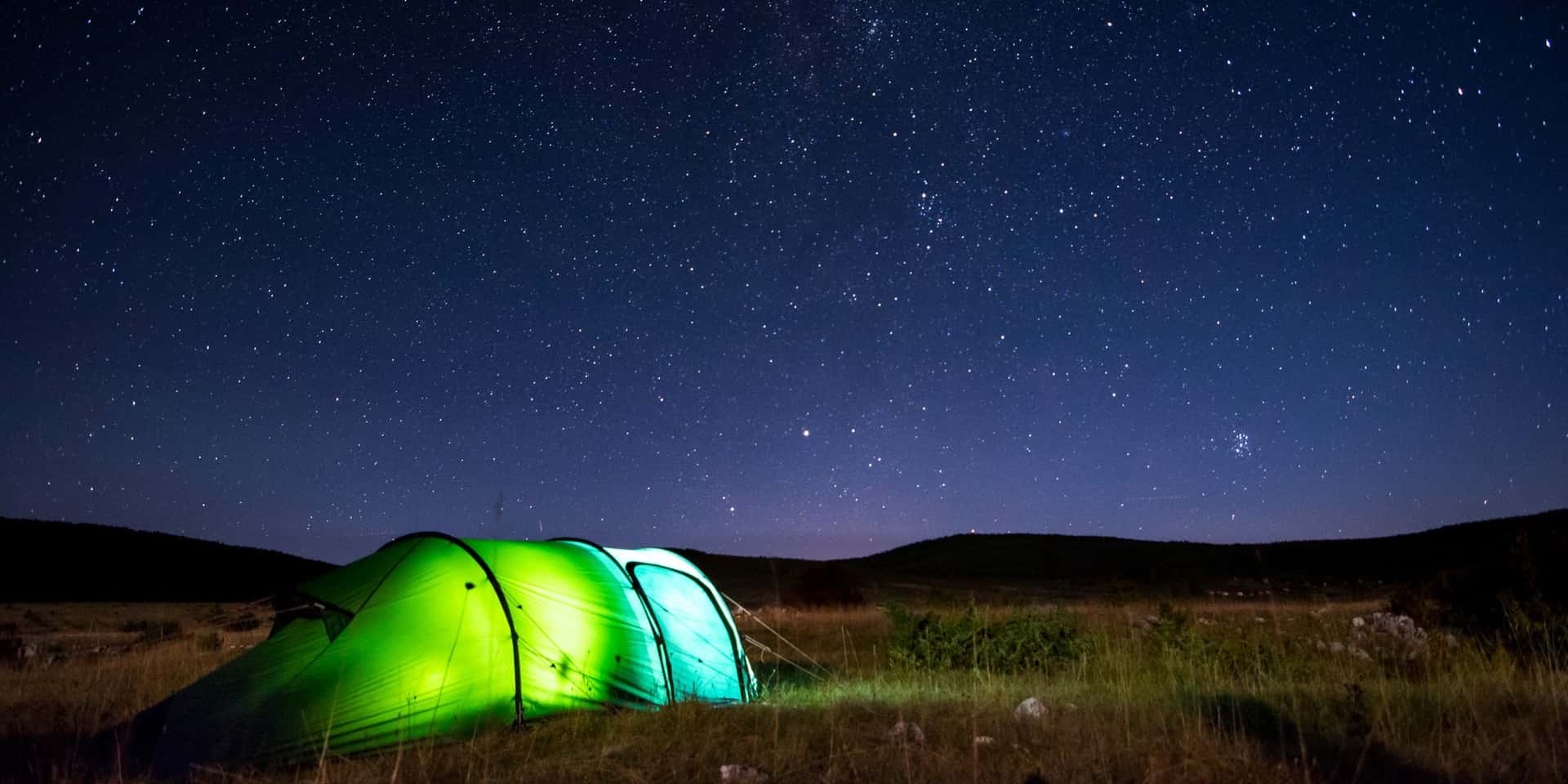
Another night under the stars, though the dew and moisture meant — as usual — spending several hours the next morning drying the tent out.
No nasty surprises, and we carried on pedalling, climbing into the mountains and out of the National Park.
Antipersonnel mine signs lined the road
The road took us climbing and climbing under a sun that was draining our energy, and — to cap it all — landmine warning signs had reappeared along the roadside, turning even a stop for a wee into something to think about.
We pushed on to reach the next town, where we could ask about a safe camping spot and where — we assumed — the mine risk would be minimal. A long day, but eventually we reached a small town (or a large village?) where a public park became our campsite for the night.
The police paid us a visit during the night — not to move us on like in Spain, but simply to check we were alright and leave us their phone number in case we needed anything. Quite a different attitude to the Civil Guard.
After that positive experience, and alerted to the mine risk, we decided the safest approach was to reach a village each day and camp somewhere public. Our wild camping shifted from stealth mode to actively seeking out public parks to pitch in.
Those larger towns, typically spaced 40 or 50 kilometres apart, were also the only places with any kind of shop where we could buy food.
The wildest mountains of Bosnia-Herzegovina
Our route aimed for the most remote, most peaceful spots — places where nature ran the show. That's not hard to find in Bosnia. It didn't take long before we were off the tarmac and riding dirt tracks.
Out there we camped in cow fields without worrying about mines — if the cattle roam freely, it must be safe.
A shepherd came over to offer help, and as always, worried about whether we'd be warm enough in the tent. A few minutes earlier we'd stopped at his house to ask for water, where his wife had filled our bottles from rainwater.
The next morning we said our goodbyes and rode on.
Bosnian hospitality
We'd already got into the habit of asking permission to camp in people's gardens — since entering Croatia it seemed people were far more willing to say yes than in Western Europe, where you sometimes get a look and a pointed finger towards the nearest campsite, which is invariably closed.
After a resupply stop at a supermarket, a light drizzle started and night was falling. We rode up to the nearest house where we could see the glow of a fire through the window and asked if we could sleep in the garden.
A grandmother answered, and without a moment's hesitation invited us inside. We communicated in basic German, gestures and drawings, and spent a lovely evening with her and a steady stream of friends and neighbours who dropped by when word got around that the two dishevelled cyclists who'd been spotted at the supermarket could actually hold a conversation — admittedly a bad one — with their friend.
She made us dinner and breakfast, offered us a shower and a room, and people brought gifts: homemade soap and herbs for tea. It seemed to us that she had a tear in her eye when it was finally time to go. Another reminder of the fundamental goodness of people in every corner of the world — this time, in Bosnia-Herzegovina.