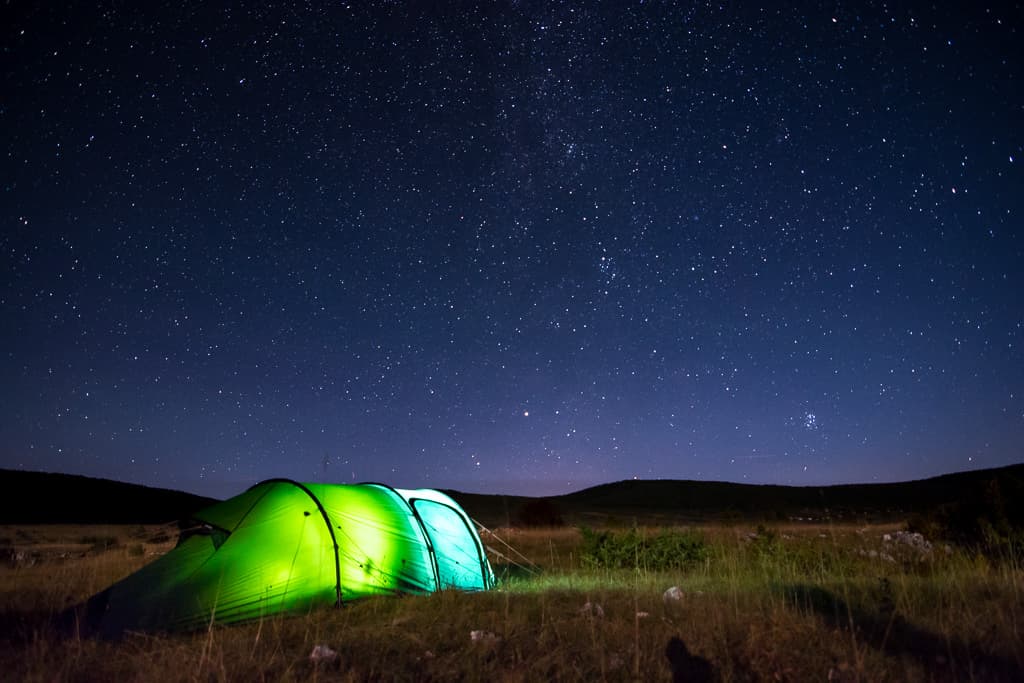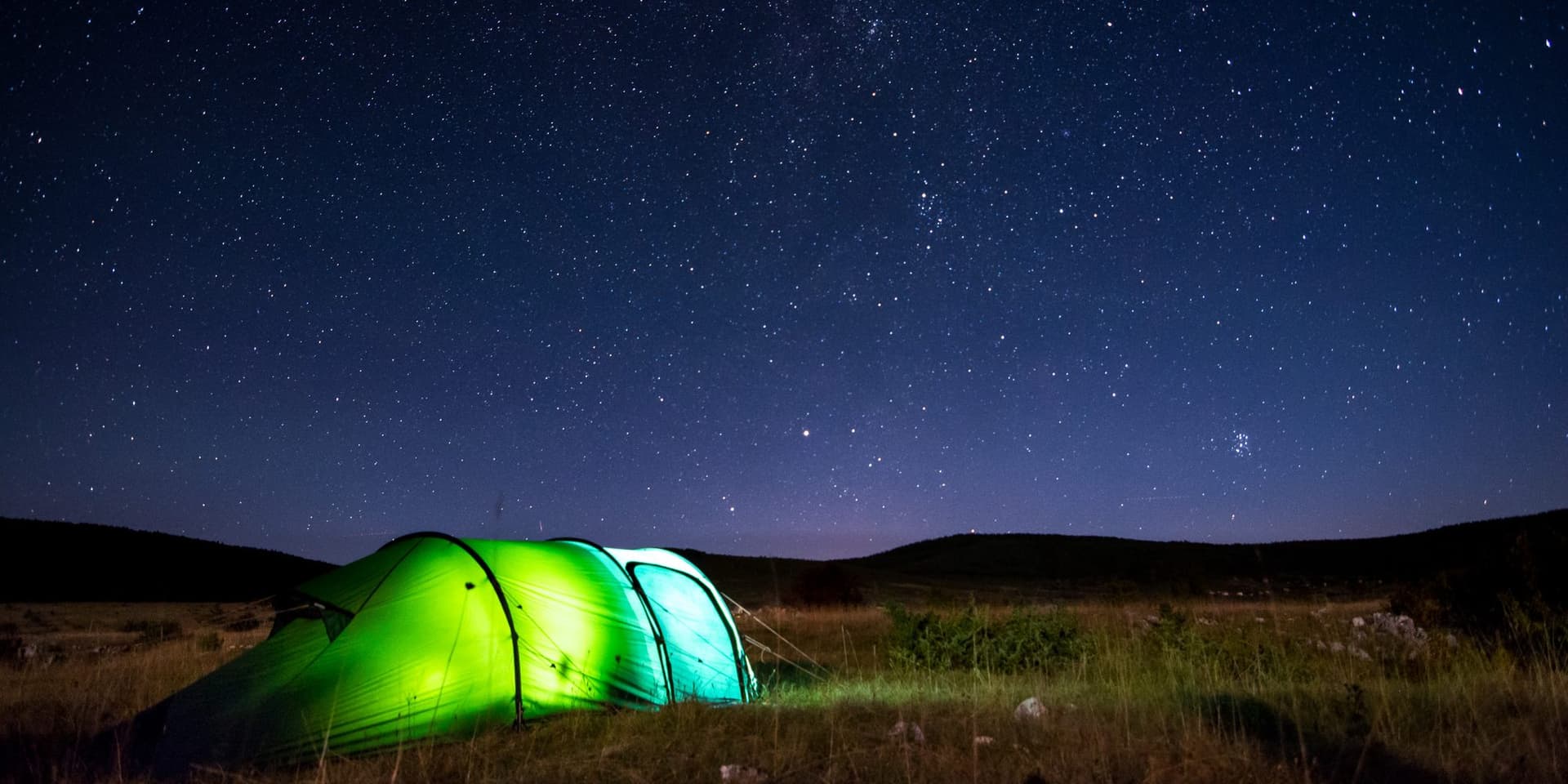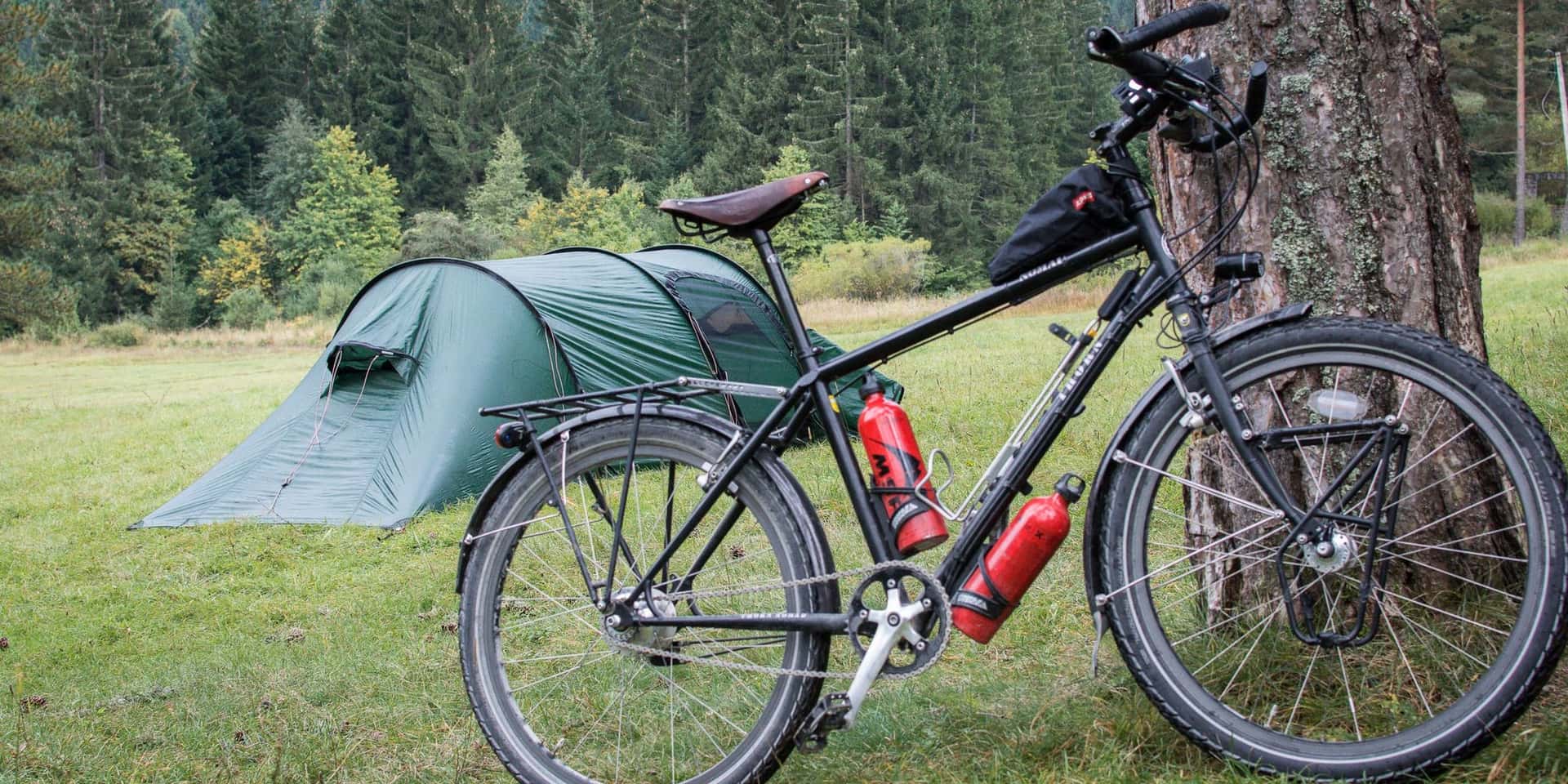
Every other night we pitch our tent in the middle of some field, forest, beach, hillside, park or garden. Wild camping is as simple as putting your tent wherever you choose and sleeping there without paying a penny. It can become an art form, but it's really not a complicated business.
It's also the single biggest reason we can keep travelling for months at a time. Strip out accommodation and your daily budget collapses to almost nothing — which is exactly the point. If you want the bigger picture on that, I've written about why we cycle long distance on a budget and 12 ways to travel cheap. Wild camping sits at the heart of all of it.
What to keep in mind when wild camping?
- Hide and seek: In our experience it's better to find a spot that can't be seen from any road or path — it saves you surprises and unwanted visitors. Pine forests work well for this, and there tend to be fewer insects. Watch out for pine resin on your gear, though.
- Legality: In many countries wild camping is banned or regulated; in Spain it depends on the region — the whole law, country by country, is in our wild-camping guide. That doesn't mean you can't do it; it just means you always have to play hide and seek. A good chunk of our nights in the tent have been in countries where it's against the law, and we've never had a single problem.
- Asking permission: If you want to sleep in a field next to someone's house or in a garden, it's worth asking first. In our experience the answer depends entirely on where you are. In Eastern Europe almost no one says no — they'll usually feed you, and sometimes invite you inside. In Western Europe be prepared for the occasional refusal, especially in touristy spots.
- Flat ground: Sleeping well is less about finding perfectly flat ground and more about the direction of any slope. You can sleep fine on uneven terrain — just make sure your head is at the higher end and that there's no side slope rolling you into a corner of the tent. We've slept comfortably on some seriously tilted ground.
- Ventilation and condensation: Many tents suffer from condensation, so if yours does, leave the vents open and let airflow through the tent to reduce the moisture build-up overnight. Having to spend hours drying the tent — or packing it wet — is a real pain.
- Avoid flood-prone spots: Don't camp in dry riverbeds or anywhere that looks like it would fill with water if it rained. And don't camp too close to the sea — the tide has a way of finding your sleeping bag.
- Don't keep food smells inside the tent. Especially in areas with wildlife, it's worth keeping food — particularly anything aromatic — outside the tent. Tie it to a rope and hang it from a tree, or use odour-proof bags.
When should you pitch and when should you pack up?
Timing is half the game. The trick we settled into is simple: pitch late, leave early.
Scout your spot in daylight if you can, then put the tent up around dusk, once you're confident nobody's watching and the heat of the day has gone. Arriving too early means sitting around in plain sight for hours, which is how you attract the very attention you're trying to avoid. Leaving at first light does the same job in reverse — you're packed and gone before anyone's about, and you leave no trace that you were ever there.
That "leave no trace" bit isn't just etiquette, it's self-interest. Take your rubbish with you, don't dig trenches, don't light fires where you shouldn't, and leave the ground exactly as you found it. A clean camper is a welcome camper, and the next person to come through with a thumb out or a loaded bike will thank you for it.
How to pitch a tent?
Every tent has its quirks, so the honest advice is to actually read the instructions for your own tent. Painful as that sounds for many of us.
Since conditions can change at any moment, make sure you peg out all your guy ropes when sleeping on exposed ground.
Our tent: the Hilleberg Nammatj 3GT
We thought long and hard before buying our tent — this thing was going to be our home for the next few years! We went with this Hilleberg model because it's a four-season tent with an enormous porch that lets you actually live inside it, which is a huge deal on stormy, cold days.
Here's a video of us pitching the tent on the steppes of Bosnia-Herzegovina. We've sped some parts up so it doesn't drag, but it only takes us 8 or 9 minutes in real life.
What are you waiting for? Sleep for free.
Why pay for a campsite when you can sleep for free? Whenever we pass a campground on our bikes and see those "tent parking lots" — hundreds of tents all crammed together — we can't help but laugh, especially when we end up pitching ours a couple of kilometres further on in the middle of nature, with better views and a river or lake nearby for a dip.
The only thing campsites offer that wild camping doesn't is a shower — and there are as many ways to get a free shower as there are to sleep for free. So that's no excuse.
And wild camping is just one tool in the kit. When the weather turns foul or you fancy a roof and a proper bed, there's Couchsurfing and, for cyclists, Warmshowers — both of which have put us up countless times. Mix the lot together and you can go an awfully long way without ever paying to sleep, as my list of 12 places I've slept for free in 300 nights shows.
Frequently asked questions
Is wild camping legal?
It depends entirely on the country. Some places — Scotland, much of Scandinavia — give you a legal right to roam and camp on most open land. In others it's banned or regulated region by region — Spain alone has seventeen different regimes — though rarely enforced if you're discreet, arrive late, leave early and cause no bother. The golden rule everywhere is the same: be invisible, leave no trace, and don't camp where you've clearly been told not to.
Is it safe to wild camp alone?
In our experience, far safer than people fear. The danger most beginners imagine — someone stumbling on your tent in the dark with bad intentions — is vanishingly rare. The real risks are mundane: bad weather, flooding, and picking a daft spot. Choose a hidden, well-drained pitch, trust your instincts about a place, and if somewhere feels wrong, move on. That gut feeling is worth more than any gadget.
How do you go to the toilet and wash when wild camping?
Carry water for washing, a small biodegradable soap, and a trowel. Do your business well away from any water source, bury it, and pack out your paper. For showers, we rely on rivers, lakes, the sea, garage forecourts, swimming pools, public beaches with rinse-off taps, and the kindness of people who let us use a bathroom. A roof isn't the only place to get clean.
What's the best tent for wild camping?
The honest answer is: one that's reliable, weatherproof and quick to pitch, in a size you can actually carry. We went with a four-season Hilleberg because it was going to be our home for years and we wanted a big porch to live under in bad weather. For most people a good three-season tent is plenty. Prioritise a tent you can pitch low and discreetly over one that's needlessly roomy.
What you ask me most
- Is wild camping legal in Spain and Portugal?
It's not as simple as 'illegal': in Spain each region sets its own rule —most ban it, but Murcia, for example, allows small-scale camping— and Portugal wants a municipal licence plus the owner's permission. The whole law, country by country, is in our wild-camping guide. What doesn't change: pitch well away from roads, out of sight, and with common sense and care it's perfectly doable.
- What food do you carry on your bike trips?
Local, seasonal produce, mostly for the price. One thing that's always there is eggs, and in countries where you can buy it, cheese. Beyond that: bread, pasta, rice, vegetables, fruit, biscuits… I eat whenever I'm hungry.