Land borders tend to be far less polished than airport passport control. When crossing a land border it's crucial to research the specific crossing in advance — the transport options and prices, whether you can get a visa on arrival or need to visit an embassy beforehand, and any notorious surcharges or scams that officials routinely try to pull.
Every border has its own story, and even two crossings into the same country just a few kilometres apart can be wildly different experiences.
Some are completely fine — fast, professional, efficient. Others will throw every obstacle they can at you and try to bleed your wallet dry.
What does a smooth land border look like?
The Malaysia–Singapore crossing is ideal for the traveller. You arrive, get off, queue up, get your passport stamped, get back in your vehicle, and carry on. The professionalism and ease of it all resembles an airport passport hall — a spacious room with multiple lanes, a couple of quick questions, and off you go.
What does a border where they'll try to scam you look like?
The Vietnam–Cambodia crossing near Ha Tien. Despite being just 6 kilometres from the border and another 15 to Kep, any motorbike taxi driver will ask more than you'd pay to cover 200 kilometres by bus from Ho Chi Minh City to Phnom Penh.
This crossing doesn't see many tourists, and the locals try to cash in on that. That said, the same lack of tourist traffic means Ha Tien is one of the places where ordinary local people are actually friendliest and most relaxed. Only those running tourist businesses are out to squeeze you; street food sellers will charge you the standard price without a second thought.
Our plan had been to walk the distance from Ha Tien to Kep — or hitchhike if the chance came up — but the rain put paid to that. In the end, after a lot of haggling we got a minivan at a reasonable price that took us to Kep along with a few other backpackers.
At the border we got a live demonstration of the mistakes the average tourist makes. Our travel companions were American, Canadian, and Russian. None of them had sorted their visa in advance or done any online research. All of them paid inflated prices — more than necessary, more than us.
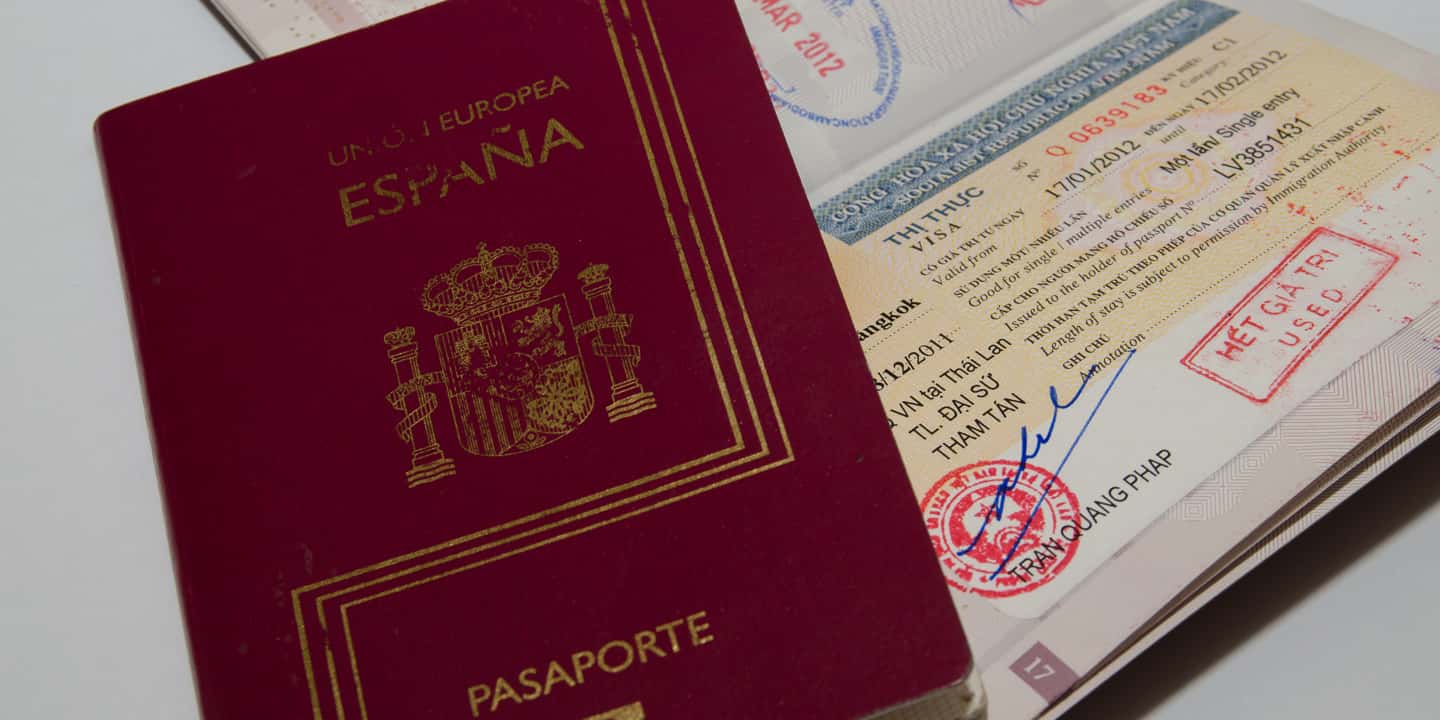
For the visa they were charged more than the official rate — and despite the official price being printed right there on the visa document, none of them seemed to notice. None of them demanded to pay the correct amount either.
We then got into the minivan and were immediately told to get out again just a few metres later. This second stop was at a checkpoint where a self-styled doctor was checking travellers' health with a thermometer that looked like a family heirloom — dusted off from the back of the cupboard and last cleaned sometime in the previous century.
After confirming you weren't gravely ill, he'd hand you a piece of paper with the address and phone number of a hospital in Phnom Penh to visit in case of illness — and then charge you a dollar for the service.
I had a look at my options and decided to let our temporary travel companions go through first. If I made a scene at the front of the queue I'd ruin his business and it would be harder to reason with him.
Everyone duly filed through, some refusing to let him stick the thermometer in their ear but none refusing to pay. When our turn came, I told him I had nothing to pay for a non-existent service, that I had medical insurance — which, for the record, I didn't, but I showed our vaccination booklets as if they were some kind of medical guarantee — and wished him a pleasant day.
The doctor waved us through quickly, trying to downplay the whole thing and hoping the Russians behind us wouldn't catch on. They smelled a rat, but paid up all the same — it wasn't until we were back in the minivan that they asked us whether they'd been ripped off.
Another example of a problematic border is our crossing from Laos to Vietnam at Cau Treu.
Tips to avoid being scammed at the border
As you can see, avoiding extra costs at the border is doable — you just need to keep a few things in mind.
The most important thing is to be informed. Information is power. If you know the official visa price, whether your passport gives you free entry to certain countries, how long you're entitled to stay, or what locals pay for transport — you can demand those same conditions or flat-out refuse to comply with their demands.
Where to find information about border crossings?
For general entry conditions, check your government's official travel advisory website — the equivalent of Spain's MAEC — by searching [country name] + [ministry of foreign affairs] in Google.
After reading the official information, it's well worth checking what other travellers report on Wikitravel (English version — the Spanish one is barely useful). You'll find first-hand accounts of border crossings, tips, and warnings.
Finally, you can look for additional information to verify what you've found, or check that it's still current, through international forums like Lonely Planet's Thorn Tree — or just go back to Google.
You can also learn from fellow travel bloggers' experiences. Here you'll find all the visa and embassy information we've gathered first-hand, as well as our accounts of border crossings throughout our travels.
Once you've decided which crossing to use, make sure you search specifically for that post — each one has its own quirks and conditions.
Transport options at the border
In your research you'll have come across different travellers' experiences, and with any luck some local knowledge too.
Often a direct bus between two major cities in different countries is cheaper than arranging transport between two smaller towns either side of the border. It's worth making sure you're not making life harder for yourself by trying to do everything independently.
In Laos we could have taken a bus from Vientiane to Vinh or Hué, but we decided to go it alone and use local transport. In Laos that was fine until we got close to the border, where we ended up walking and hitchhiking to pay local rates. And once across, we had a full-on argument and several walks before getting to Vinh for under $5.
In total we spent around $10 — when the direct bus would have cost just $2 more.
If there's no cheap transport between cities, or if you're already near the border, the best move is usually to get transport to the border and then walk a bit on the other side, turning down the minivans waiting right at the crossing. A few hundred metres further on you'll always find local transport at a reasonable price.
Common border scams and how to handle them
A classic is being asked to pay an inflated price for the visa. Refuse, show documentation of the official cost if you have something printed from a reliable source, and stay calm. These situations are usually flagged up in advance during your research, along with the best way to push back on border officials.
You might also be hit with a processing fee at the checkpoint. This is usually not legitimate — if you refuse and ask for their ID number, they'll generally let you through. Again, you should have read about this in advance.
Currency exchange causes all kinds of trouble. It's strongly recommended to carry dollars in small denominations, especially $1 bills, along with other strong regional currencies. If you can get hold of some local currency before crossing, even better — sometimes you can swap money with a fellow backpacker heading in the opposite direction who's leaving the country with some leftover cash.
And then there's the price of transport. Drivers and touts at the border will approach you with offers that are rarely reasonable. My advice: decline everything unless the price actually matches what you consider fair, and start walking. Once you've shaken off the professional scammers you'll find local transport — or you can simply flag down a passing vehicle hitchhiker-style and travel to your destination at the local rate.
That's it — do your research before crossing and don't let them rip you off!