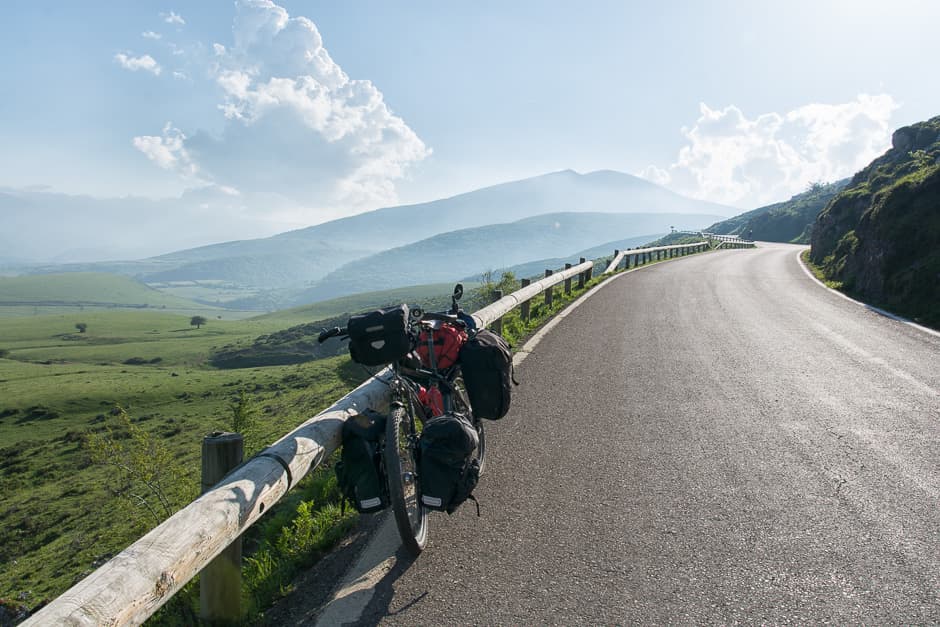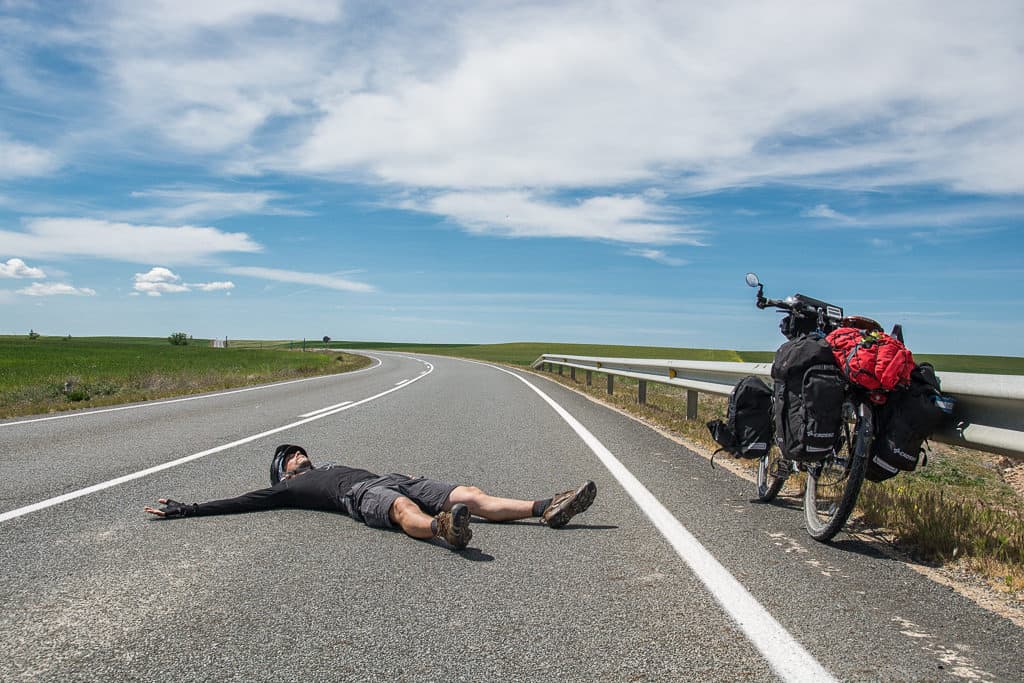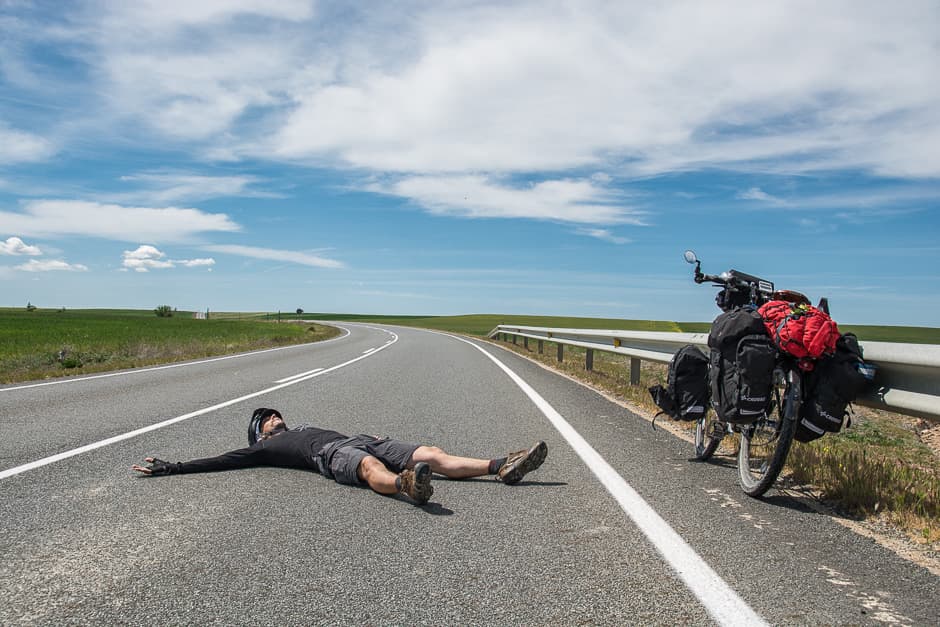
Ever since we arrived at the Pyrenees, the road kept throwing Camino de Santiago signs, arrows and scallop shells at us — whatever route we took, whatever direction we were heading, they were a constant presence across Spain.
When we reached Andalusia and realised we'd accidentally been following the Camino Mozárabe route, we made it official and applied for a Pilgrim's Credential.
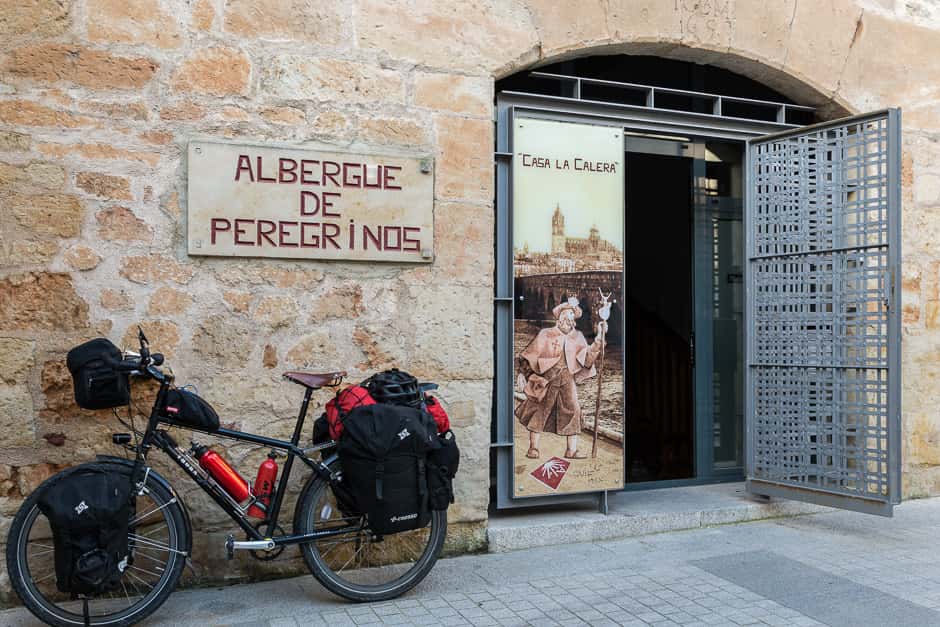
That opened the doors of the pilgrim hostels — albergues de peregrinos — that serve as rest stops along the many Camino de Santiago routes crossing the Iberian Peninsula.
Crossing the different Camino de Santiago routes
We never committed to following any single route properly, end to end. Instead we hopped from one to another, crossing Spain towards Santiago in our own way.
We passed through the Camino Manchego, the Camino de Madrid, the Camino de Ávila, the Ruta de la Plata, and the inland and coastal versions of the Camino Portugués.
At the time of writing we're in Porto, in Portugal, and our cycle route will take us along the Atlantic coast — meaning we'll keep crossing more Camino de Santiago routes, this time going the other way.
For anyone planning to cycle across Spain: here's the good news. For the €2 cost of a Pilgrim's Credential, you can access all the free (or paid) pilgrim hostels, even if you're not following the Camino de Santiago strictly, and even if you're going in the opposite direction.
Our experience in pilgrim hostels
Hospitality towards pilgrims is the norm here, and most municipalities put real effort into providing accommodation.
After our stop in Madrid — and a mild hangover from the #Premios20Blogs gala — we started the Camino de Madrid stretch.
We wanted to take it easy that day. Our only goal was to actually get out of Madrid, so we aimed for Tres Cantos, the first stop on the Camino de Madrid with pilgrim accommodation.
The contact address I'd found was the local council (ayuntamiento), which surprised me — but I figured someone there would point us to the hostel.
I left Ilze outside in the square with the bikes and went in to ask. To my surprise, the security guard told us to bring both bikes inside — the pilgrim accommodation was right there inside the town hall, in a room set aside for exactly this purpose.
She started by apologising for how basic it was, but I stopped her quickly — we'd spent several weeks sleeping outside or in a tent, so if there was hot water and a mattress, that was already a luxury.
Her face went through horror, pity, surprise and incomprehension all at once, followed by questions that revealed her fears about sleeping outside, especially in the cold. Just as well I didn't mention we'd left London in January.
What are the pilgrim hostels actually like?
We had a similar experience in Arévalo, where the local police kept insisting we probably wouldn't want to stay in the pilgrim accommodation as it was pretty rough. I had to tell them more than once that all I needed was a shower and somewhere to sleep.
Our visits to pilgrim hostels during our cycling trip around Spain showed us every kind of accommodation — but we never once had any trouble finding somewhere to sleep under a roof when we made the effort to look. And when we didn't, we camped perfectly happily.
One word of warning though: in major towns and key stops along the Camino, bring earplugs and plenty of patience. In the more packed dormitories, you're pretty much guaranteed a world-class snoring competition all night long.