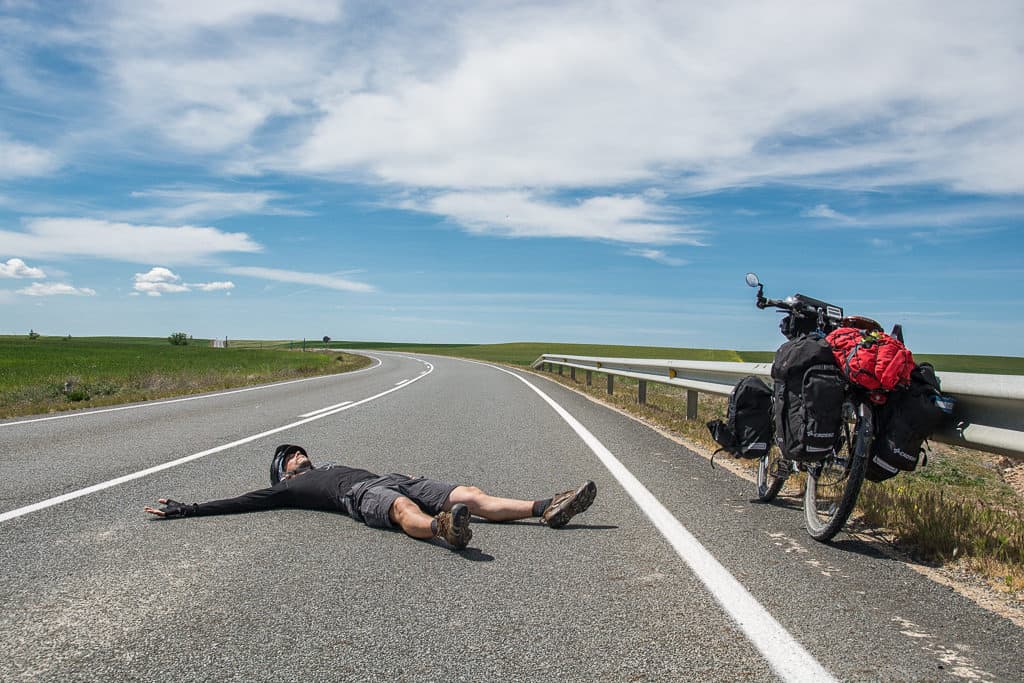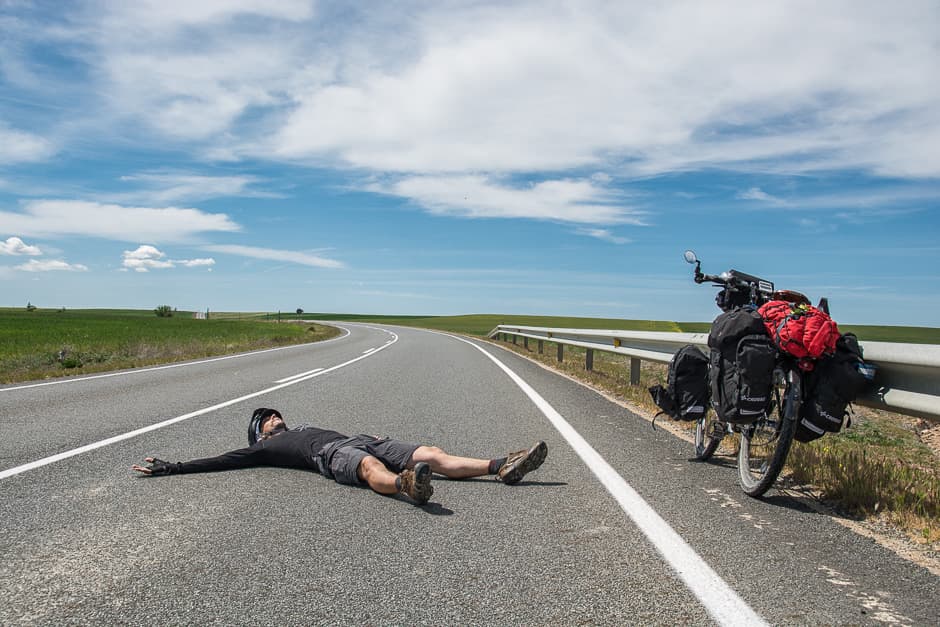
The final section of our Iberian Peninsula loop was northern Spain — a stunning part of the country to cycle, when the weather cooperates — and one I haven't told you about yet.
A quick recap. A few months back we re-entered Spain after our loop through Portugal, crossing the estuary that separates Galicia from its western neighbour. The first of many.
Pedalling through Galicia
The plan was to follow the Galician and Asturian coastline. Simple enough on paper, but zoom into the map and you'll see how the coastline in Galicia writhes and squirms.
Fortunately that complication comes with stunning rewards — incredible beaches, cliffs, headlands and sunsets over the sea.
Our arrival in Galicia came with rain. Coincidence? Maybe — but it's curious that after several months cycling through Spain with barely a drop, we hit the northwest corner of the country and immediately spent a solid week in the rain.
Galicia has always drawn me. Its landscape — more Irish than Spanish — its hearty, generous food, the warmth of its people. Galicia is a region of travellers, and we felt genuinely welcomed there, despite the cold and rain.
Asturias — a homecoming of sorts
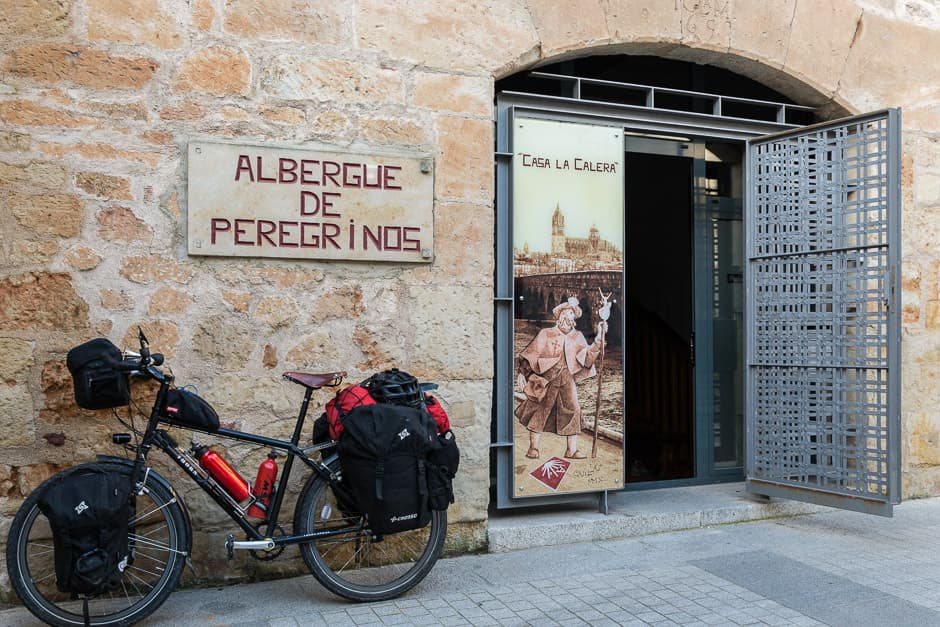
The old national road hugging the coast is a delight to cycle — almost no through traffic. We'd go hours without seeing a single car; pilgrims heading for Santiago were more common than drivers.
In Gijón I visited old colleagues, friends from a previous life, people who still matter to me.
In Asturias I drank the cider, ate the meat, and enjoyed riding the rollercoaster of the Asturian coast with its extraordinary beaches.
There's a stillness to the Cantabrian sea that I appreciate. I've never liked overcrowded destinations where nature has been buried under concrete. That's why hidden beaches pull me in so strongly.
We spent one of our many tent nights beside one of them — on a beach that's actually inland, formed where seawater filters through cracks in the cliff face. A paradise hidden in Asturian green: Playa del Cobijeru, or Gulpiyuri.
And as if that weren't enough, a stalactite and stalagmite cave lets you walk through the cliff to the other side, all the way to the sea, which crashes against the cave entrance and floods it at high tide.
The Picos de Europa by bike
We reached Cantabria and decided it was time to cut inland, heading for the source of the Ebro to follow the river down towards Zaragoza and the Mediterranean coast.
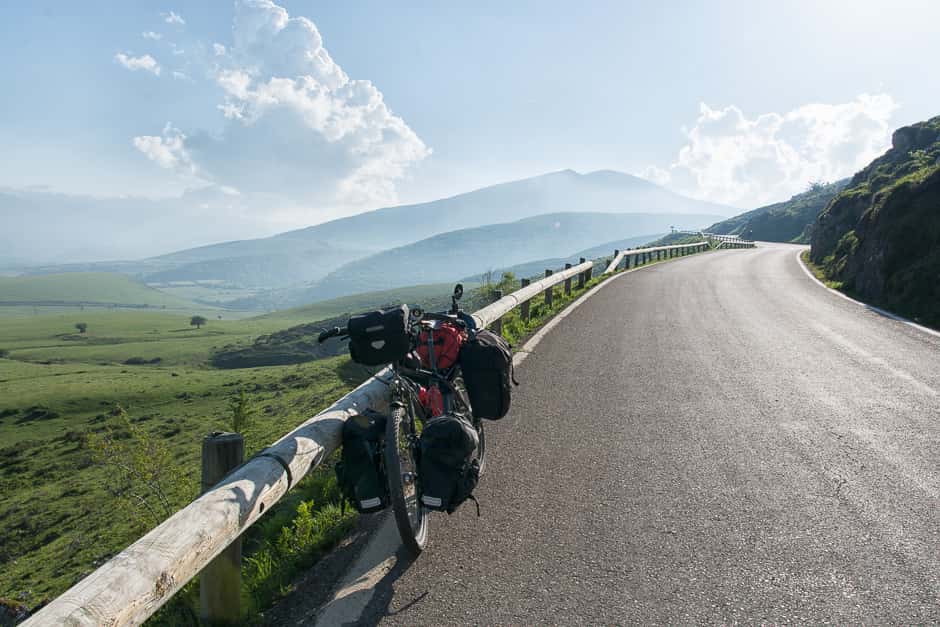
The mountains didn't scare us anymore. In fact, we were delighted at the prospect of a couple of mountain passes — we'd been missing them.
If the Cantabrian coast is quiet, I needn't explain how quiet the mountains are. Me, Ilze, nature and a whole lot of nothing.
Even the villages are quiet!
Following the Ebro by bike
More nights camping between mountains and valleys, hiding from view behind a church or alongside the Ebro reservoir.
Cresting the last pass meant that the rest of our ride to the Mediterranean was mostly downhill. We followed the Ebro on the bikes, riding through Castile, La Rioja and the Basque Country until we reached Aragon.
And after a brief pause we pushed ourselves to reach Zaragoza in time for our last proper stop. Gathered our strength. And kept pedalling — through France, Italy, Slovenia and wherever came next.