We'd finally reached Ban Natane — that isolated, lost village in the Phu Hin Bun Natural Park, hemmed in by mountains with the Konglor cave as the only way in or out.
The locals have to navigate through the cave to leave the valley, or cross the mountains on a gruelling four-hour hike — which is why Ban Natane remains a genuinely authentic place.
That authenticity was exactly what drew us to spending the night with one of the families who live (or survive) in Ban Natane, to experience first-hand what life in a real Lao village looks like.
Village entrance sign
The international term for staying with a local family is a homestay. Plenty of ecotour operators organise homestays in various Lao villages, including Ban Natane, but we had no intention of paying a premium for the same thing — we wanted nothing to do with guides or agencies.
We simply walked into the village and started asking around: "homestay? homestay?" Eventually, with the help of a French scientist studying the valley's fauna and flora, we found the village chief, who assigned us a family to stay with.
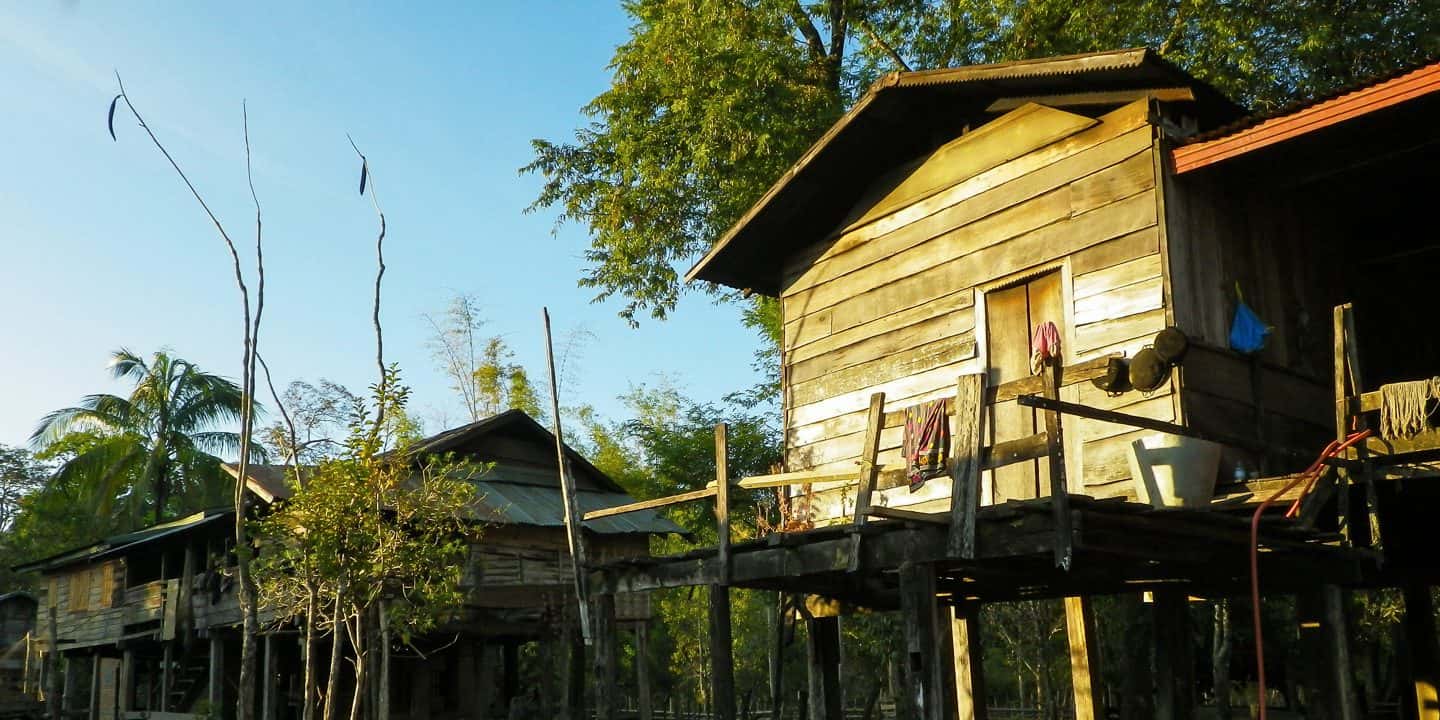
The village and its surroundings
Homestays in Laos are fairly widespread, and the price is fixed (if you're not going through a tour operator): 50,000 kip per night, including dinner and breakfast.
Reminder: 1 euro equals around 10,400 kip, so 50,000 kip works out to about €5.
The village's crops
Ban Natane is a village that lives on subsistence farming and livestock. There's just one tiny shop where you can pick up snacks or beer — though it's nothing like any shop you've seen in the West. It's essentially a room with products thrown in without any order or care whatsoever.
The village at dawn
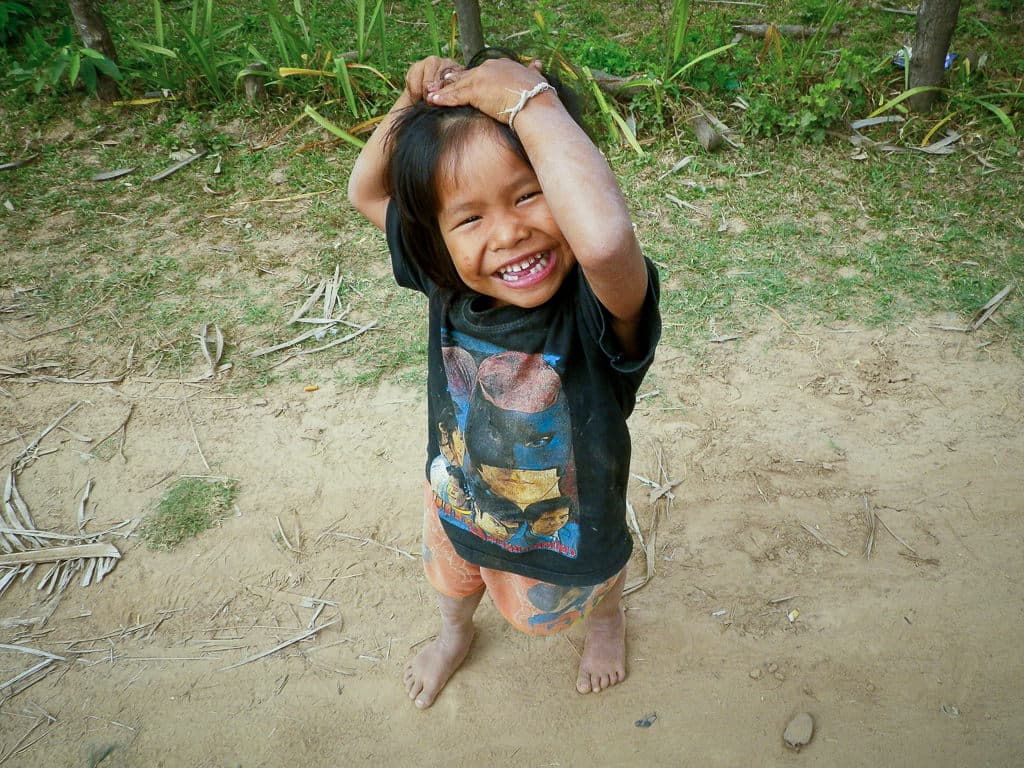
A kickabout with the local kids
The village temple
We slept in the family's home, on mattresses laid out in what would pass for the living room, with a mosquito net and a few sheets and blankets. We couldn't communicate with the family beyond gestures — none of them spoke a word of English — which made the experience more authentic, if occasionally frustrating.
Our sleeping spot
The food was very simple — whatever the land produces, which isn't much. As guests, though, we had the honour of eating first; and we were treated generously, with food rich in protein — mainly eggs.
Dinner was eggs with herbs and lots of salt, sticky rice, a heavily spiced snail soup, and boiled corn. Breakfast repeated most of the same, minus the corn — but first came a ritual.
Two village elders came to the house in the morning and joined us for breakfast. The woman brought a boiled chicken — the whole bird, skin and head intact. The elders then moved their hands over the chicken, murmuring prayers, placed their hands on us, and tore off pieces of meat which, along with sticky rice, they placed in our hands as an offering.
Breakfast with the village elders
When we finished eating, the ritual continued: each person present tied a bracelet around our right wrists, still murmuring and singing their prayers. The purpose of the rite was to bless us with good luck and protect us from the spirits that inhabit the cave on our return to the outside world.
Blessed bracelets for the cave ahead
After breakfast we headed back to the cave — this time by tractor — ready to make the one-hour crossing through the darkness of Konglor. During the journey a scorpion landed on my right foot; on reflex I slapped it away and sent it flying. Fortunately our encounter with Konglor's wildlife ended without any further drama.
Tractor transfer to the cave entrance
Into the dark
From there we headed back to Tha Khaek to return the motorbike. The first section of road was mountain, full of good sensations and views; the last 100 kilometres were dead straight with nothing to keep us entertained, which at least meant we made it back to Tha Khaek by midday.
Kids at the roadside stop
The road back
Other Loop posts you might find useful:
- Starting the Loop through central Laos.
- Continuing the Loop to Konglor cave.
- Konglor cave.
- My recommendations for the central Laos Loop.
Since Tha Khaek is a pretty dull transit town, we hopped on a bus that same day to Vientiane, the Lao capital. The fare was 60,000 kip, and the six hours felt eternal — especially for Ilze, who was still feeling the toll of the motorbike days on the Loop.