When moving money from one country to another, from one currency to another, cutting fees to the absolute minimum is essential. You can save hundreds of euros over a lifetime of travel.
For anyone living abroad or on a long trip, this is non-negotiable — there's no more pointless expense than bank charges.
Here's how to get the best exchange rate and keep banking costs as low as possible.
How to send money to Spain from abroad?
If you're living in England, the US, or any other country with a different currency to the euro, sending money by bank transfer — from Spain to your country of residence, or back again — comes with several charges: international transfer fee, currency conversion fee, inflated exchange rate.
The international transfer fee can often be eliminated by choosing a bank that offers free European transfers — but usually that means transfers within the euro zone only.
If you live in a euro-zone country, that's not a problem. You just need a bank offering free transfers.
If your country uses a different currency, you've got several problems even if you find a bank with free transfers — they'll sting you on the currency conversion and use an inflated rate, or the real rate plus a fixed percentage.
Depending on your bank and the amount you're sending, you could lose between 4% and 20% of your money. Your money.
Stop giving money to your bank
I've always been careful with money and I've never paid bank fees — I always research before signing anything and make sure I pick the bank with the best deal.
When it came to sending money from England to Spain, I went online looking for alternatives to the traditional system, because I didn't want to lose a chunk of my savings.
That's when I found TransferWise, which works by connecting individuals transparently. You want to send money to England, but there's always someone wanting to send money the other way — so they automatically match your request with someone else's and do the exchange using the interbank rate.
The interbank rate is the best exchange rate there is — the real one, better than Visa, Mastercard, or any bureau de change.
TransferWise charges a 0.5% commission on the transfer, and everything else is free. Since the rate is the interbank rate, that 0.5% shrinks even further in real terms.
The system is completely secure — they move billions every year, so they have zero interest in defrauding you and every interest in staying in business.
It's extremely easy to use. You fill in your details, the recipient's details, and the amount.
You can choose whether to send an exact amount or to maximise what the recipient receives at the best available rate.
If you want an exact amount to land in the destination account, they'll ask you to send a few extra euros as a buffer in case the rate moves while the transaction goes through (it takes a few hours). Any leftover gets refunded to your account. This is useful for paying for services outside the euro zone.
They give you a bank account to send the money to — one that's in your own country, so the transfer is free on your end. They then handle sending it to the destination account abroad.
The service is very fast. They give a generous window of several days — sometimes a week — but I've used it half a dozen times and it's never taken more than 48 hours. There's an express option for a higher fee, but it's not worth it except in emergencies.
How to withdraw cash abroad?
When travelling, we have to use debit or credit cards, carry cash to change at a bureau de change, or exchange it before leaving home.
Most debit and credit cards charge fees when you use a foreign ATM: a withdrawal fee, and a currency conversion fee — and if they're not charging the conversion fee, they're probably using an inflated exchange rate. Do your research.
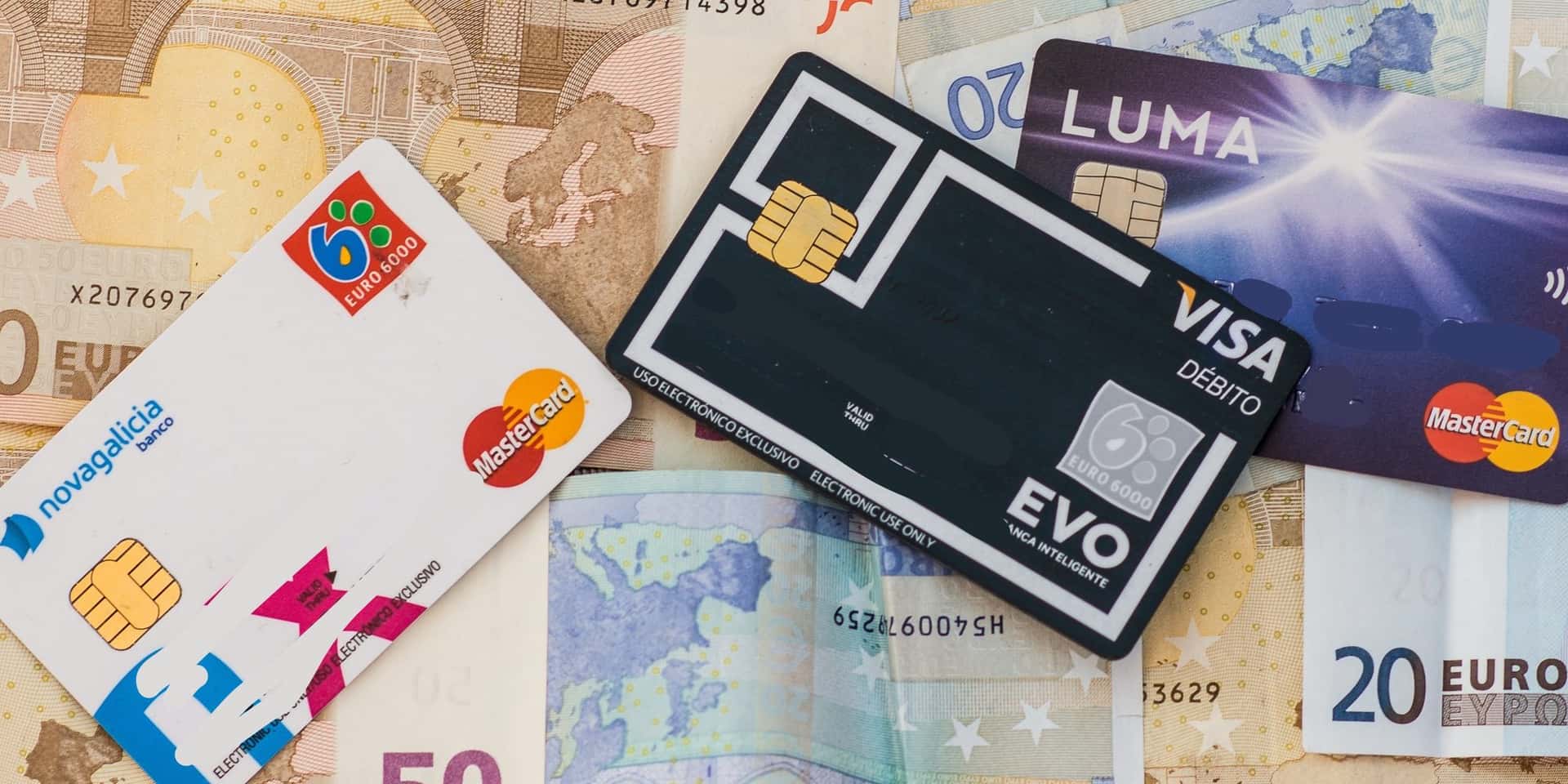
At the time of writing, two Spanish banks offer cards with zero fees on foreign ATM withdrawals: Abanca and Evo Banco. Both have youth accounts with fee-free foreign cards, but you have to be under 30.
Evo Banco also offers a full current account for all ages with similar benefits (and more), but it requires a salary or pension direct debit, or five standing orders. Who has five standing orders?
Since 11 July 2017, EVO Banco stopped using the official Visa exchange rate and started applying their own. This carries a moderate surcharge on some currencies but a brutal one on others. For more information and recent alternatives, read this post about the EVO Banco exchange rate scam.
If you don't qualify for any of these options, or your salary is already committed, you can use bureaux de change.
In most cases it's better to change money in the destination country — you'll get a better rate — but avoid airports, compare rates between different places, and check the real exchange rate online first so you know how much they're trying to mark it up.
I'd strongly recommend using a calculator — every phone has one — to make sure the conversion is what you think it is. I've met plenty of people who got confused and walked into the worst rate rather than the best.
Finally, if you're going to be somewhere for a while, it's worth finding out whether it's possible to open a local bank account.
In many countries it's a simple process, and once you have one you can use TransferWise — as described above — to send money with the best possible rate and minimal fees (the 0.5% can even be waived on your first transfer).
How do you manage your money abroad? Have you ever felt robbed by your bank?
What you ask me most
- How do I avoid ATM fees abroad?
In many countries ATMs charge a fixed fee per withdrawal (in Thailand, for example, around 150–180 THB). To make it worthwhile, take out large amounts at once rather than lots of small ones, and use a card with no exchange fees. And don't change the currency in your own country before leaving: you'll get a worse rate and more fees.
- Is PayPal a good option for changing currency?
Not really. PayPal doesn't charge a visible fee for the exchange, but it applies a worse rate than the official one, so you end up paying a hefty surcharge.
- How do I get cash if I lose my card while travelling alone?
What I'd do: talk to other travellers, ideally from your own country, and offer to transfer money to their bank in exchange for them withdrawing cash with their card. That way you dodge almost all the fees; Western Union and the like take a big cut.