Chengdu is the capital of the Sichuan region — a "small" city by Chinese standards, though enormous by everyone else's, with its 15 million inhabitants.
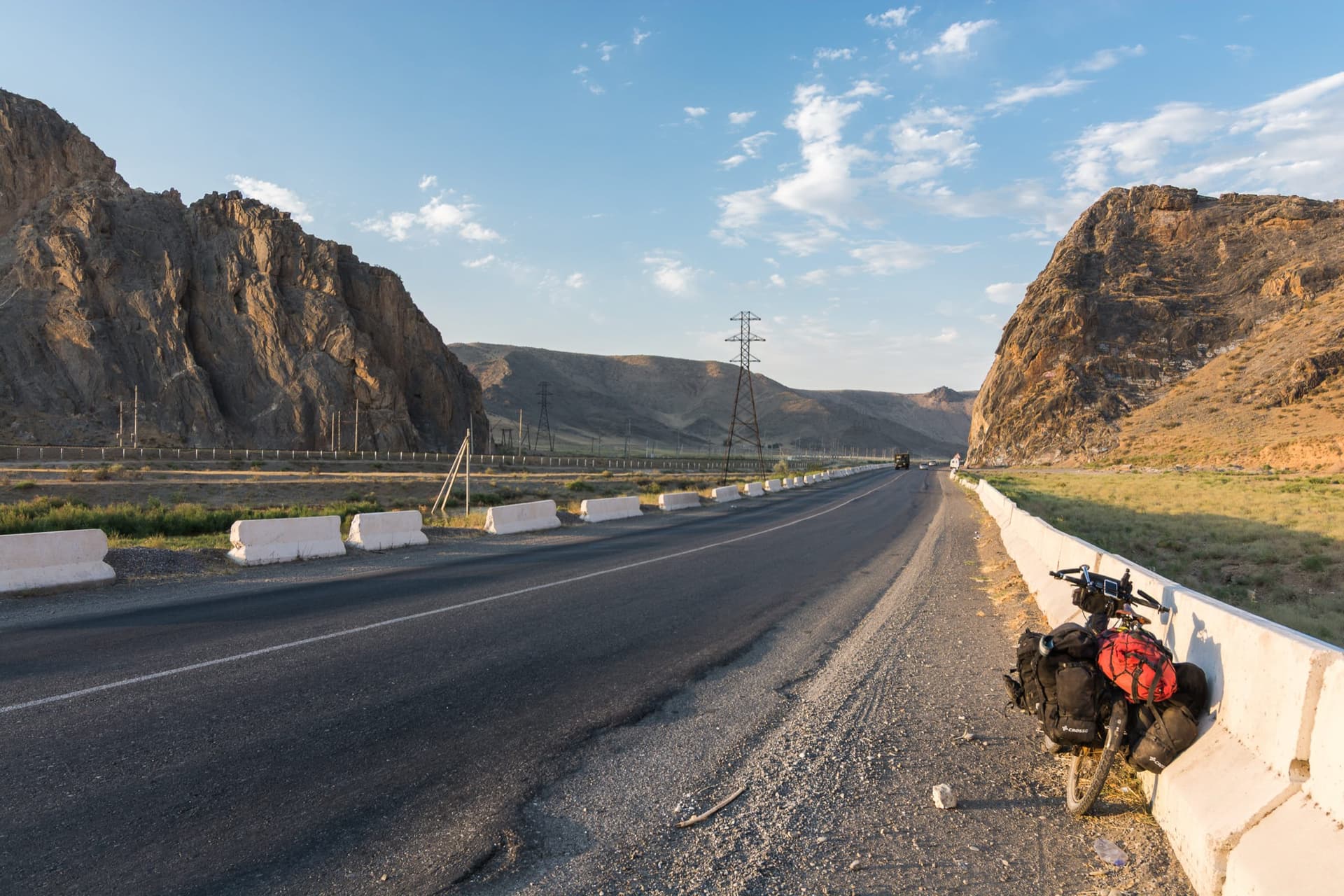
I arrived in Chengdu by bicycle after nearly 2 years since leaving London, intending to make a technical stop before pushing on towards Laos.
In Chengdu I quickly fell in with a large expat community, a relaxed atmosphere and living conditions that, at first glance, looked pretty attractive to an outsider.
Even so, after the frenzy of crossing Central Asia and the Xinjiang region in western China, all we could think about was rest.
First days living in Chengdu
During the first weeks in Chengdu we did Couchsurfing — first with an American and his Chinese wife, who quickly became close friends; then with a couple of Spaniards, Lois — the bagpiper in the photo — and Antonio, who anyone watching us would have sworn we'd known for years.
All of them helped us settle in quickly, steered us away from poorly paid work, and filled us in on just how well a white foreigner can do in Chengdu.
Another option for settling in is to find temporary accommodation — through something like Hundredrooms — which gives you time to hunt for the right flat without the pressure of finding a permanent place from day one.
It turned out that other long-distance cycle tourists had just arrived in Chengdu — people we'd crossed paths with on the road — and they told us they were doing job interviews with a view to staying in China for a year to save money before continuing their journey.
China had never been a country I'd considered living in for a stretch, but the break, the environment and the people around us opened our eyes to just how easy and affordable life in Chengdu could be.
The idea of working there was tempting — far preferable to pushing on and stopping somewhere much more expensive, like Australia, or somewhere with lower wages, like Malaysia.
Teaching English in Chengdu
We gave ourselves a week to look for work — to see what was on offer and whether staying in China made sense for us.
Through friends we'd made, we contacted several local agents via WeChat — China's WhatsApp equivalent — that same afternoon, and by the next day we had interviews with all three.
By that same day we had several job offers on the table. This was looking promising.
We decided not to accept the first offers and spent the rest of the week getting a feel for the market. There wasn't a single day that week when we didn't each receive at least one offer.
The interviews were quite something. I've always thought a job interview should be a two-way process — both sides figuring out if they're right for each other. But in China, as long as we were white enough and our English was acceptable enough, that seemed to be the whole thing sorted. I was the only one asking questions.
By mid-week I had several interesting offers on the table:
- A nursery offered me work as an English teacher with small groups. They'd sort my work visa, pay around 11,000 yuan a month for roughly 20 hours of teaching per week, put me up in a nice flat in a gated community with a swimming pool, plus bonuses on completion of the contract, a return flight to Europe, and more.
- A public school in a nearby town — two hours by bus — offered teaching work with transport, accommodation and food included while I was there, and 16 hours of classes per week, two weeks per month. The pay was 7,000 yuan a month for two weeks of work (32 hours total), with the option of scheduling lessons Monday to Thursday only.
- Other companies offered part-time work at 150–200 yuan an hour giving English lessons — some in their classrooms, some in students' homes, sessions ranging from 40 minutes to 2 hours.
At the time of writing, 1 euro equals 7.36 yuan. So 11,000 yuan works out at around €1,500, 7,000 yuan is about €950, and 150–200 yuan comes to roughly €20–27.
By that point I had already decided I'd rather run photography courses, as I'd done elsewhere — in Georgia, for example, than work as an English teacher for someone else's company. But since the two-weeks-a-month school was very keen and practically begging me to accept, I agreed to work for them for two weeks — enough to cover our initial costs in Chengdu without dipping into my European accounts.
Meanwhile, Ilze had started working at another public school while she looked for something more stable and interesting — getting practice with students and earning something in the meantime. They paid her 150 yuan per 40-minute lesson.
Within a week Ilze had the offer she liked best: a job at an English language academy paying 13,800 yuan a month, one-year contract, monthly and quarterly bonuses, an end-of-contract bonus... all for a maximum of 22 hours per week, most weeks closer to 15. Best of all: individual lessons or two or three students at a time. The one "catch" was that most of the students were young children.
Renting a flat in Chengdu
Flats in Chengdu go fast — what's available one day is gone in a couple of days. You have to be quick and decisive. Forget about finding something remotely; you'll pay a hefty premium for the privilege of going through an intermediary from abroad.
We rented directly from the owner, saving ourselves agency fees — typically a full month's rent — and were able to negotiate directly and agree to pay monthly rather than quarterly or biannually, which are common practices in China.
We found the flat, along with the rest of the flat and job listings, through expat forums, classifieds websites and WeChat groups.
We paid 2,500 yuan a month for a flat of about 70 square metres in a good area — recently renovated, western-style bathroom, kitchen with a breakfast bar, two terraces, a large living room with a flat-screen TV and air conditioning, and a spacious bedroom with air conditioning too.
You can find cheaper flats in Chengdu, but we happened to take the first one we liked on the very first day we started looking. It was right next to Ilze's workplace — 15 minutes on foot — which felt like a real luxury in a Chinese city. Best of all, the landlady was lovely and spoke good English, so she handled any issues, sorted out all the utility registrations and dealt with bills in Chinese, saving us a lot of headaches.
Friends of ours paid 2,200 yuan for a two-bedroom flat with a living room — spacious, though with older furniture in a traditional Chinese style. Others paid a bit more for places that felt like mansions, including some with rooftop gardens.
It's possible to rent a room in a shared flat in Chengdu for around 1,000 yuan a month, but given the salaries and flat prices, I think renting alone is perfectly reasonable here. Ilze spent her last month in Chengdu in a shared flat when I started cycling into the mountains of western Sichuan, and paid 900 yuan a month.
In general, I saw flats going for between 1,500 and 3,000 yuan depending on how new they were, the area, how well furnished, and size (1–2 bedrooms). If you're looking at prices from outside China: don't. Wait until you get to Chengdu — you'll find much better and much cheaper.
Bills aren't too bad, though it's very common to have a building management fee that varies enormously between properties, so it's worth asking exactly how much it is each month (I heard of cases anywhere from 30 to 250 yuan) to factor it into your rental calculations.
Power or gas cuts happen occasionally (roughly once every two months in our case), and internet is a nightmare — you always need a VPN to access international websites with any reliability.
A huge amount of content is blocked by the Great Firewall, and the rest of the sites we're used to visiting run agonisingly slowly because of it. After trying a lot of options, the only VPN I found that worked consistently and reliably was ExpressVPN.
It's paid, of course — no free VPN works well enough in China for actual work, and most either don't work at all or stop working quickly. But there's a 30-day money-back guarantee with no questions asked, so at worst you'll have used a VPN for a month and had the money back in your account within a few days of claiming.
Getting around Chengdu
Shortly after arriving I started taking on work at different points across the city, so I bought a second-hand electric scooter to avoid relying on public transport. For around 1,200–1,800 yuan you can pick up a second-hand electric scooter (cheaper or pricier depending on battery size and power) and avoid the traffic jams and a fair chunk of the chaos. Best of all, when you leave you can sell it again for roughly what you paid.
Public transport in Chengdu works reasonably well, but it's packed at rush hour.
All city buses cost 2 yuan — very affordable — but the real gem is the circular bus that runs both ways around the Second Ring Road. It runs every few minutes and travels above the rest of the traffic, making it the fastest way to get around. Living near the Second Ring Road is highly recommended.
The metro works well but feels a bit slow and gets expensive if you're travelling far, since you pay by number of stops. At the time of writing there were four metro lines open in Chengdu with another about to open, and plans for a total of ten lines covering the whole city within a few years.
Other work in Chengdu
After finishing my first two-week job and settling into the flat, I started running photography courses and building websites for several Chinese companies.
In between, and taking advantage of my ample free time, I started picking up "white monkey" gigs — I'll write a separate post about those, but briefly: they're jobs where the main — and sometimes only — requirement is being white.
My next job was translating English to Spanish for a video games company, where they paid me to play and translate their productions.
A couple of months in I started teaching Spanish at a private school, and shortly after that I began working as a basketball coach for an English language academy.
In between everything, I also had time to do freelance photography work for a couple of companies.
As you can see, opportunities were never in short supply — and plenty more came along that I turned down on a weekly basis.
Don't mistake this for walking in and kissing a saint. But if you put yourself out there, get in contact with people already working in sectors that interest you, join every relevant WeChat group you can find — for your sector, for expats in your city — and talk to absolutely everyone you meet... you'll be surprised how quickly a well-paid job comes along.
Holiday in Japan
By May I was starting to feel a bit restless in Chengdu, so I dropped all this work and took off for a couple of months in Japan.
In Japan I hitchhiked around the Kansai region, camped wild and urban, hiked the Kumano Kodo trails, sneaked into and slept inside the abandoned amusement park in Nara, and ended up spending a few weeks in Osaka working as a photographer before heading back to Chengdu.
I'll write about all of that in due course. If there's something in particular you'd like to know about, drop a comment!
Back in Chengdu, I spent a month barely doing a thing — a holiday from the holiday — before picking up the bicycle again and heading into the mountains of western Sichuan, through the Tibetan areas of China and south towards Yunnan, which is where I am now.
What a year in Chengdu taught me about working abroad
If there's a thread running through all of it, it's this: in the right city, a stretch of work isn't a detour from the journey — it's part of how you fund the next leg of it. Chengdu happened to be one of those places where a foreigner can land, plug into a community and start earning within days. The mechanics that made it work weren't clever or lucky; they were repeatable. Show up. Get among people already doing what you'd like to do. Say yes to the first thing that covers your costs, then trade up once you understand the lay of the land. And above all, talk to everyone — most of my best gigs came through a conversation, not an advert.
If you'd like the bigger picture of how this stop fit into the whole adventure, here's a new life in China, and if you're wondering how anyone pays for years on the road in the first place, I break it down in how to fund your travels.
Frequently asked questions
Is it easy to find work in Chengdu as a foreigner?
In my experience, surprisingly so — at least if you're a native or fluent English speaker. We gave ourselves one week to look and were fielding multiple offers within a day or two, mostly teaching English but also part-time tutoring, photography work and odd "white monkey" gigs. The trick is to get plugged into the expat community fast: WeChat groups, classifieds and word of mouth do most of the heavy lifting.
How much can you earn teaching English in Chengdu?
When we were looking, full-time teaching offers landed roughly in the low-to-mid thousands of yuan per month (often with a flat, bonuses and a return flight thrown in), while part-time lessons paid by the hour or by the session. Ilze's best offer was an academy contract at a comfortable monthly salary for around 15–22 hours a week. I'm quoting the figures I was personally offered at the time — pay shifts year to year, so treat them as a rough sense of scale, not a current rate card.
How much does it cost to rent a flat in Chengdu?
We paid a moderate monthly rent for a roughly 70 m² flat in a good area, renting directly from the owner to dodge the agency fee (usually a full month's rent) and to negotiate paying monthly rather than quarterly. Renting a room in a shared flat costs noticeably less. My strongest advice: don't judge prices from outside China — wait until you arrive and look locally, where everything is cheaper and the choice is far better.
Do you need a VPN to live and work in China?
Yes, if you rely on the wider internet. A huge amount of what you're used to is blocked by the Great Firewall, and the rest can crawl. After trying many options I found a paid VPN was the only thing reliable enough for actual work — free ones tended not to work or to stop working quickly. Pick one with a money-back guarantee so you're not stuck if it underperforms.
What's the best way to get around Chengdu?
For me it was a second-hand electric scooter — cheap to buy, easy to resell for roughly what you paid, and it skips the worst of the traffic and the rush-hour crush. Public transport is solid and cheap (flat-fare city buses, plus an excellent elevated ring-road bus), with a metro that's handy but adds up over longer distances since you pay by the number of stops. Living near the Second Ring Road makes everything easier.
Thinking of basing yourself in China for a while, or curious about any of the jobs above? Drop me a comment.
What you ask me most
- Is it easy to find work teaching English in China?
Dead easy. People practically stop you in the street to offer you work. The standard contract usually includes perks like a flight home, accommodation or health insurance. The best thing is to just show up and look for it on the ground.
- Do you need a work visa?
The work visa is trickier to get. Look into your specific situation carefully before committing to anything, because the rules change and it's worth having it all in order.